
Stop bars moved at numerous locations in SW Minnesota
Trending
That thick white-line that extends across all lanes in one direction to indicate where drivers should stop their vehicles is now closer to the intersection at many highway locations in southwest Minnesota, according to the Minnesota Department of Transportation.
A districtwide stop bar project is nearly complete in Southwest Minnesota District 8, which includes Chippewa, Kandiyohi, Lac qui Parle, Lincoln, Lyon, McLeod, Meeker, Murray, Pipestone, Redwood, Renville, and Yellow Medicine counties.
The project was launched on July 19 and cost the district $74,000.
Stop bars, also known as stop lines, are 24 inch-wide, solid white lines that extend across all lanes in one direction to indicate where to stop.
In Minnesota, stop lines are placed between 30 and 4 feet from the nearest edge of the intersecting roadway, District 8 Public Affairs Coordinator Sandra Schlagel, announced on Monday.
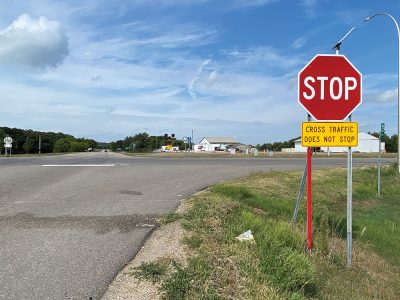
"Stop lines provide drivers with an additional visual reminder to stop before entering or crossing traffic at an intersection. The project included moving stop bars closer to numerous highway intersections throughout the district to enhance safety. Red reflective strips were also installed on some stop sign posts to make them more noticeable," she said in the release.
The release also stated that the stop bars were placed closer to the intersection to provide drivers:
• Better sight lines
• Shorter crossing or merging distances
• Shorter crossing or merging times
In addition, stop bars are easier to see from other legs of the intersection so that drivers can more easily identify an intersection's traffic control, such as a two-way stop versus an all-way stop.
Drivers, according to the release should stop at intersections where the stop line was moved, drivers should come to a complete stop prior to the new stop line. Per state statute, drivers are required to stop at a stop sign, or at a clearly marked stop line. Due to the characteristics of each location, the stop sign may not be in exact alignment with the stop bar.
During installation, Schlagel said most of the old stop bars were removed before the new lines were painted. However, crews still need to remove the old stop bars at a few locations to complete the project. The old stop bars were removed by water-blasting into the pavement, which can change the color of the pavement surface. The different color will oxidize and become less noticeable over time, and the rough surface will improve as it is worn down by snowplow blades.