
Why are egg prices rising?
Bird flu could be one reason, but grocery stores point to Easter preparations as well
Trending
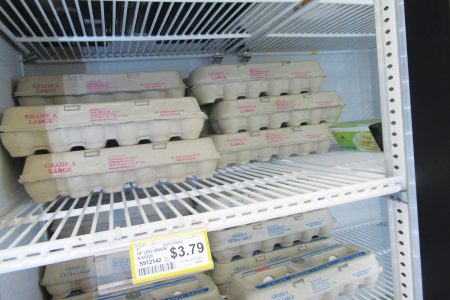
MARSHALL -- The price of a carton of eggs at the grocery store has been going up lately, at the same time that U.S. farmers have had to destroy millions of chickens due to the spread of avian influenza.
This week, managers at local grocery stores said they've noticed the price jump, even if they couldn't say for certain if bird flu was the only cause.
"Prices have definitely gone up, but we haven't had any supply issues yet," said Travis Almich, owner of Almich's Market in Slayton. However, he said it's still possible there could still be egg or poultry shortages some time in the future.
Bruce Schelhaas, owner of Tracy Food Pride, said he's had customers ask why prices were high.
"It can be a whole array of things," Schelhaas said.
Eggs are also in higher demand at this time of year.
"Egg (prices) usually go up right before Easter anyway," he said.
The H5N1 avian flu virus has affected chicken and turkey flocks at farms across the U.S. Farmers have had to kill around 22 million birds nationwide to prevent the spread of the virus, according to the Associated Press. In Iowa, around 13 million chickens and 305,000 turkeys have been killed since outbreaks began a month ago.
Iowa is the nation's leading egg producer, and had 46 million chickens on farms in February, according to data from the U.S. Department of Agriculture.
This week, egg supplies in the Midwest were down 7%, according to the U.S. Department of Agriculture's national weekly shell egg inventory. Stocks of large and medium eggs had decreased the most from last week.
Managers at some area grocery stores, including stores in Slayton, Tracy, Tyler and Canby, said they were still able to stock eggs.
A spokesperson for Hy-Vee declined to comment for this story. However, as of Friday evening, the store-brand eggs were in stock at the Marshall Hy-Vee location for $3.09 a dozen. The same day, eggs were $3.04 at the Aldi location in Marshall, with a limit on the number of cartons per household due to a temporary warehouse shortage. The refrigerator case for eggs at the Marshall Walmart was empty on Friday evening.
"Prices have gone up, but we haven't had any supply issues yet," said Brian McKeen, manager at Jim's Market in Canby.
McKeen estimated that egg prices were up about a dollar a dozen from what they were three weeks ago.
Area grocers said it's hard to say for sure whether bird flu outbreaks were the only reason behind the price increases. Increased demand for eggs around the Easter holiday already tends to lead to higher prices, they said.
Schelhaas said there were other factors that could play a part in the cost of eggs, from labor to the cost of animal feed. Groceries as a whole have seen price and supply issues over the past couple of years, too.
"You don't know if it's a supply issue, a worker issue or an equipment issue," he said.
Grocery store owners and managers said their businesses had to follow the what the markets were doing in terms of price.
"It's a tough one," Almich said.
Poultry flocks in Minnesota have also been affected by bird flu. The virus has been confirmed at 21 sites in a total of 11 Minnesota counties, including Lac qui Parle County. Avian flu was found in a commercial turkey flock there on March 29. So far, a total of more than 1.01 million birds have been affected statewide, according to the Minnesota Board of Animal Health.
The Centers for Disease Control and Prevention say the cases of flu in birds don't pose an immediate public health concern for people. No human cases of the avian influenza virus have been detected in the U.S., the Associated Press reported. Eggs and poultry are still safe to eat. Cooking poultry and eggs to an internal temperature of 165 degrees kills bacteria and viruses.