
Small ways we can help
Earth Day was this past Friday and I was very excited to be able to celebrate this day with students at True Light Christian School and the Lynd Public School. As adults, we sometimes lose sight on where we are going in the whole process of our environment and how we as individuals impact our environment around us.
After spending two days with younger groups of environmental advocates, I feel pretty good in saying that our Earth is in safe hands. As the adults in these young people’s lives, we need to keep encouraging them and showing them through actions of our own that we, too, believe that every small thing we do for Mother Earth will benefit the next generations.
There are so many small ways that we can help. A few ideas are: pick up trash in your neighborhood (even if it’s not yours); help your elderly or disabled neighbor with placing their trash or recycling cart at the end of their driveway; giving up single use plastics such as prefilled water bottles; plastic cutlery; straws and plastic cups or learning how to compost your food scraps in your backyard.
These things are so simple but make such a great impact on our environment. We offered a sign up recently for free composting classes and while I was truthfully hoping for 20 residents to come, we now have over 60 residents who have stepped forward with interest in these classes.
Food waste is the number one cause of methane, which causes climate warming. It’s not cows or cars or other things that we do but food waste. When we throw food scraps such as potato peelings or banana peels into the trash can, they are brought to the landfill and composted without oxygen (because we compact the trash down as it is brought in to the landfill) and when the food waste is decomposing, it creates methane.
As residents, we can help to lower and even stop methane by wasting less food. We have ideas on how to do this on our webpage under the environment department page. We have also included information on backyard composting. In Minnesota, the metro area is mandating that food should not be thrown into the trash. Many other counties are asking residents to voluntarily stop throwing food scraps and wasted food into the trash. We are hopeful too that we can start to have Lyon County residents to start thinking about ways to reduce food waste in their lives and think about backyard composting for food scraps.
There are other ways to keep certain items out of the landfill with the hope that some of it will be reused again for other purposes. If you have not received a copy of our Lyon County Green Disposal Guide, please give me a call for one. It will help you know more about where to dispose of things you no longer want or need.
We have had nearly 200 visitors this year so far to the Household Hazardous Waste Facility with items; 75 residents with mattresses for recycling; 140 residents with shredded paper; 87 residents with electronics; 156 residents with Styrofoam and 12 residents with books they no longer wanted. We have recycled nearly 270 tons of household recyclables such as paper, plastic food containers, aluminum cans, cardboard and so forth. The amount of trash from Lyon County going into the landfill is down slightly at this time of the year compared to last year.
While these numbers are fantastic, we would like residents to consider reducing items that they purchase. Without reducing in the first place (which is also first on our mantra, Reduce, Reuse and Recycle), we will continue to see some of our services as well as other services such as those who take in items for reusing purposes to be overwhelmed at this time of the year. Remember to take advantage of your cities clean-up day in order to stay ahead of those things you no longer want or need. It is everyone’s responsibility to dispose of unwanted items accordingly. For more information on reducing, reusing or recycling, go to our webpage at www.lyoco.org or call the Environmental Department at (507) 532-1307.
Local Columns
Looking back on the family vacation
This is the time of year when Americans traditionally embark on extended journeys with their loved ones. Some of ...

T-bone and walleyes
Walkability: The plus side of Marshall’s 2026 downtown detour
It hasn’t been an ordinary summer for motorists who drive the streets of Marshall on a daily basis. It’s been ...
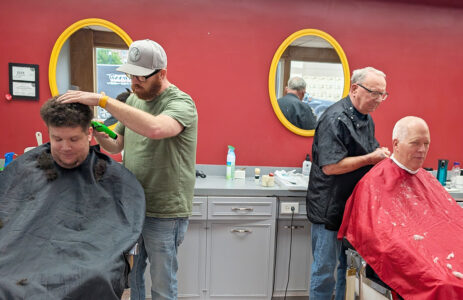
On the cutting edge of barbershop history in Marshall
Celebrating a birthday during complicated times
Happy birthday to us! Next Saturday, our country will be 250 years old. I have been around for seventy of those. ...
Ask a Trooper
Question: I would like more information on trailer hitch ball sizes and why they have different sizes? Answer: ...