
Custer – Terry – Kent – Garvin
Part II
The devastation brought to the crops by the grasshopper scourges from 1873 to 1876 caused many to return east to find other work or means to feed their families. Some families looked beyond their pride and accepted state welfare. Others did not. The blizzards of 1872-73, 1874-75, and 1880-81 had equally disastrous effects as all travel, commerce and communications stopped, leaving the people in helpless isolation for weeks at a time. Prairie fires, covering large numbers of acres, also meant the visitation of calamity.
There was also a settled side to life for these pioneers. There were pleasant times and an outlook of optimism was shared in the community. The following report of a visit to the home of Benjamin and Catherine Thomas, by the editor of the Marshall News Messenger in August of 1876, conveys this feeling of well-being: “Town of Custer. Last Tuesday we made our first visit to the town of Custer, which is 109-41 (township range), formerly known as Blaen Avan, a better name in our opinion than the last adopted.
The Rev. Simmons and family with a dog and a shotgun accompanies us and family, and we here wish to add our testimony that the elder is a good shot, as several chickens have proved.
The town of Custer seems to be our banner wheat field, or others haven’t reported their big yields. Mr. Avery of Custer raised 205 bushel from 8 1/2 bushels seed. D. Edwards on the Griffeth farm reports 92 bushels from 3 1/2 bushels of seed. Avery called his field five acres, but our measurement made it six. Another man claimed 48 bushels per acre, but there was more or less good guessing about it.
The Cottonwood runs through this town and supplies the settlers with considerable timber and some fine grazing lands. Along the river the ground is somewhat rough and picturesque for a prairie country, and there are some of the coziest nooks for farmhouses that we have seen in the county, among which that of Mr. Thomas, Sr. is the best we saw. Down among the bluffs by the river, and surrounded by groves of large trees, it has the most perfect protection from storms and is a beautiful retreat in summer or winter. Lake Yankton and other lakes dot the town and make it one of the most desirable towns in the county.
Custer is well settled up, largely with Welsh, who make an enterprising, thrifty community. They have a church presided over by the Rev. Peregrine and good school facilities.
We were generously entertained by Mrs. Thomas and, at tea, had the satisfaction of sipping our Souchong from a china cup brought from Wales and 125 years old. We had a very pleasant visit there, saw a very desirable country, and found a very hospitable people. We recommend those seeking farms to not skip Custer.”
The Dakota Central ran through the south part of the town – the nearest markets were Tracy, 4 miles east, Balaton, 2 1/2 miles west, Amiret, 3 miles north, and Marshall, 10 miles north. Although the railroad was built in 1879, the station was not established that early, and the site was not entitled to a place on the map until 1886. Four years earlier, a sidetrack had been laid there, and in railroad circles the site was known as Siding No. 7. The siding became known as Terry in the spring of 1886, and on April 30 the Terry town site was platted by the railroad company.
About 1886 the name of Custer was changed to Kent, and then in 1891 the name of the station was changed from Kent to Garvin in honor of a graveling freight agent of the railroad, by the same name, in July of 1891. Until businesses were established there, however, the place was generally referred to as Seerfield after the owner of the elevator.
(Continued next week)
Community Voices
Be careful with the hugging
I attended a young woman’s graduation from Blaine High School. Most of my graduation ceremonies have been at ...
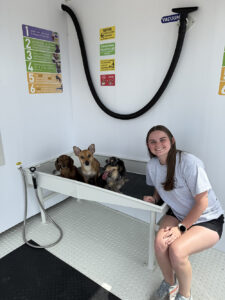
Dog House owner soaking up the success of self serve dog wash
The Key: a place that provided plenty of Marshall area fun
The Key on Minnesota Highway 19 near the Marshall airport is gone, but it will never be forgotten. I have great ...
Lynd parents, students deserve answers
Editor’s Note: This letter read to the Lynd School Board was submitted as a letter to the editor. Because of its ...
Roaming the Ye olde renaissance fest
A dragon holding a silver ball in its terrifying teeth was perched next to the gate. It was the first hint that we ...
Summer reading remains important for both children and adults
Summer is the season for lots of things like swimming, boating, baseball, ice cream, picnics, parades and outdoor ...