
Trending
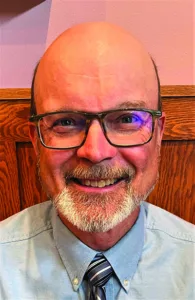
We have been learning about Norman Teigen, who grew up in Mankato, graduated from Mankato State College, and accepted a teaching position at Marshall High School. When notified he would be drafted, he enlisted in the Army and became a chaplain assistant. He deployed to Vietnam in October 1970 as chaplain assistant to Lt. Col. Huebner, Chaplain to the 1st Aviation Brigade, at Long Binh Post.
Like American troops in any war, U.S. troops in Vietnam welcomed news from home. Norman was no exception.
"I was lucky because I got a lot of mail from a family that cared. It took three or four days to get to me. I wrote a lot of letters from Vietnam because my duties were light, the days were long, and the postage was free. Of course, we had to be careful not to say anything of military significance. That wasn't difficult for me because I didn't know anything of military significance."
When asked whether he engaged in self-censorship, Norman had a ready answer.
"Of course. One time I talked about an alert the night before and that caused concern with my family. After that, I decided that even if the base were attacked, I would never share that kind of information. I told them about how I was doing and what I saw."
Norman stayed abreast of news from the US during his tour of duty.
"Newsweek came in the mail. I don't exactly remember how I got the New York Times. Maybe I bought it once a week at a PX newsstand. We also had AFVN (Armed Forces Vietnam Network), a defense-sponsored radio network. I listened to the classical station. They had a contemporary music station, but I didn't care much for contemporary music. I felt I was well-informed about what was going on."
Norman enjoyed some special experiences during his tour of duty, some of which involved USO-sponsored shows.
"We always had entertainment coming through Long Binh like rock and roll bands, but I can't remember the individual shows. We also had many well-known personalities come through like Clinton Jones of the Vikings, Larry Czonka of the Dolphins, and Johnny Bench. I was able to visit with these celebrities. Johnny Bench was just a young player at that time, so it was neat to see his career take off in later years."
Norman also recalled his experience of Christmas in Vietnam.
"On Christmas Eve of 1970 we attended the Protestant service officiated by Oswald Hoffman of the Missouri Synod. I introduced myself to Hoffman after the service as he and my dad had been classmates at the St. Louis Seminary back in the 1930s. This service was in the 20,000-person Long Binh Arena where the Bob Hope Show was presented on Christmas Day."
Norman attended that Bob Hope Christmas show.
"We were located near the amphitheater, so it was easy to get there. Of course, we were advised not to go to the good seats near the front. They were for the guys who had been wounded or who were stationed in the field. We yielded. So we were in the back and had some responsibility for helping guide people afterward. They estimated there were 20-25,000 men and women at the show, mostly men, of course. It was like 105o that day, so it was hotter than hell. After the show I was able to go down front and was close to Bob Hope. He was gracious and thanked everyone who was there. I got some pictures with him. That was a highlight of my time there."
Norman benefited from the US drawdown of forces in Vietnam, departing in June 1971 before completing a full-year tour of duty. But he found reassembling his life in Minnesota a challenge.
"I flew back to Oakland and then from San Francisco to Minnesota. It seemed so foreign to be in a combat zone and then (suddenly) back in the States. There didn't seem to be a lot of awareness of what was going on in Vietnam and people didn't care. My family, of course, was happy to see me. I'd been a teacher at Marshall High School and thought it might be a good idea to get an advanced degree and go back into teaching. But when I got out (of graduate school), I realized I was overqualified. The economy was not good and schools were more likely to hire new teachers right out of Mankato State or St. Cloud State, rather than someone who had teaching experience and a master's degree. I was too expensive. Those were hard times. I eventually got a job with an insurance company and things got better, but I was pissed off back them. The impact (of my Vietnam service) was total disruption. I have never recovered from it. I had a nice teaching career before Vietnam."
Norman's Vietnam service haunts him in other ways.
"My doctor and the Veterans Administration diagnosed I would have lifelong effects from Agent Orange exposure. I believe the fact that I was in helicopters all over Vietnam meant I had many exposures. It was environmental exposure from the air and residue on the ground and in the water. I was naïve at the time. I trusted that the government would be truthful. I trusted that leaders would do the right thing. As a result of my Vietnam experience, I became more skeptical. Ever since that time I've tried to balance being skeptical against being a cynic."
Thank you for your Vietnam service, Norman! Welcome home!
©2026 William D. Palmer.