
Trending
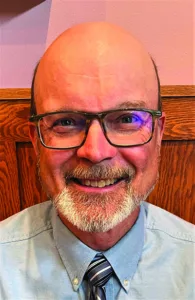
Greg Taylor was born Dec. 11, 1947, to Mildred (Ayrhart) Taylor and David B. Taylor at the Anna Maria Memorial Hospital in Marshall. Greg was the second of the Taylors' three children. The eldest, David Michael, was five years older than Greg. Their sister, Terri Lee, was five years younger than Greg.
Greg described some of his family's ethnic history.
"One branch of my family, the Benedicts, were Catholics, but they left the Catholic Church (and were persecuted) as French Huguenots. They went to Holland for about 20 years and then went to Scotland. So, I claim Scottish heritage. They didn't come to the (American colonies) until 1638. My grandma was a Benedict. My dad's name is David Benedict Taylor."
Greg's mother's family, the Ayrharts, were also of Scottish ancestry, but the family experienced great hardship during the 1920s and '30s in Redfield South Dakota.
"My grandfather left them in 1928 when he was 30 years old and ran off with an 18-year-old woman. My great-grandma, my grandma, and the three girls (Greg's mother and her sisters) were left high and dry. My great-grandma was a dishwasher and cook at a restaurant in Redfield and my grandma was a waitress. They lived above the place. They weren't starving, but they were church urchins. It was not good."
Greg first met his Grandfather Ayrhart when he was 9 years old.
"We didn't see my grandfather until 1956 and he wasn't allowed in my mother's home. Everything was cordial, if you know what I mean, but he was not allowed in the house. We ate at a picnic table in the garage when he came."
Greg's parents both began life and grew up in South Dakota.
"My dad, David B. Taylor, was born in Wilmot, South Dakota, on April 19th of 1917. My father started college at the South Dakota School of Mines, but developed rheumatic fever in 1936, so he dropped out of school. By about 1938, my dad was a route salesman for Watertown Sash and Door. My mother, Mildred Irene Ayrhart, was born in 1920 in Redfield, South Dakota, and grew up there. She was a registered nurse."
Greg explained how the two got together.
"They were both South Dakota people and teamed up in Watertown. It was probably in 1939 that Dad met my mom. They got married in 1941 when both were living in Watertown. My brother was born in 1943 and they moved to Marshall in 1943."
The young family moved into a home on E Street. Greg's dad opened Taylor's Lumber Yard between East Main and the Chicago & Northwestern Rail line that paralleled Main Street. He also became a force in local civic life.
"My dad was a real busy guy. I idolized him. He was involved in civic matters and setting up the college, but that was later. He was chairman of the industrial park for 18 years and on the utilities commission. He was on the board of the 1st Northwestern Bank for 20-some years, beginning when he was 39. So, he was always meeting with his customers and meeting about civic issues. He was also a big-time Mason at the Masonic Lodge."
Greg described his parents' roles in the family during his early years.
"(Mom) was the peacemaker and the mother. My dad was the disciplinarian, but there wasn't much. There was verbal discipline, but not physical. I don't think I was swatted after I was 6 years old, but they took privileges and they'd send you to your room. We attended the Presbyterian Church virtually every week. One branch of my family, the Benedicts, were Catholics and my wife's Catholic, so I now attend the Catholic Church."
Greg's dad bought land west of the Marshall Country Club for a future home. Greg was 5 years old when they built on that location and it had an enormous influence on his growing up years.
"We were right next to the golf course. We built in 1952, so it was about 1950 when he bought that property. It's the house next to the golf course on Hole 7, the first house where the golf course ends before Westwood Acres. That's where I grew up. My dad owned four lots and sold (the others) to Jerry Moberg, Ray Hiller, and John Williams. Jerry Moberg built in 1957 and then John Williams. The Hillers came in 1961."
Living on the edge of town, adjacent to the wooded, Redwood River, offered distinct advantages to Greg, his friends, and his siblings.
"When Dad was gone, I'd take care of the horses, his horse and our horses, the kids. We had a little barn back there. There were four stalls and a tack room. It had a round roof and a hay mow for straw and alfalfa. We also had a paddock. We owned about an acre and a half in a triangle to the west of Travis Road, where Golden Pond is today, and our horses pastured there. We took them there in the warm weather. The Hillers owned 10 ½ acres and, back then, the Hillers' drive-in theater was there."
He explained the attractions the Taylor home offered his young friends.
"Most of them would come to our house because we lived almost in the country. And there were woods there along the river. So, we had trails and traps and stuff in those woods. There was that and then we had the horses."
But life at the Taylor house also included chores and the Redwood River was not always a good neighbor, particularly in 1957.
©2026 William D. Palmer.