
Midges, habitat and purple light traps
Trending
This summer's greatest discovery for our household wasn't a new lure, some outdoors equipment, or even a new piece of hunting or angling technology, rather it was a plug-in nightlight for the cabin called a Zevo. While I'll avoid the appearance of sponsoring or championing this ultraviolet emitter with a flypaper insect trap attached to it which my wife purchased, I have to admit that seeing all variety of mosquitoes, moths, houseflies and midges attached to after the first weekend in the outlet was nothing short of astounding. In a late summer and early fall where the no-see-ums were prevalent to the point of requiring jeans and long sleeves in almost every outdoor setting no matter how warm, it too did an excellent job of clearing those tiny biting midges from our house.
In fact, on Friday night, my wife showed me just what the hallway Zevo picked up, and it looked like someone dumped a pepper shaker on the tacky paper adjacent to the purple bulb. There had to have been 300 of the tiny biting midges -- certainly small enough to slide through our screen door mesh which was open much of the week in the warmer than average late fall temperatures -- that were stuck to it.
On stand the following morning, with little activity save for the crowing pheasants and gobbling turkeys in the adjacent woods, I began to correlate those same bugs being the cause for the slowdown in my bowhunting area. With the astounding number that had made their way into my residence and onto the electric fly trap in the hall, it stood to reason that the resurgence of epizootic hemorrhagic disease (EHD) in south central and southwest North Dakota was so prominent this season where a hard frost didn't come until just a few days prior to this column.
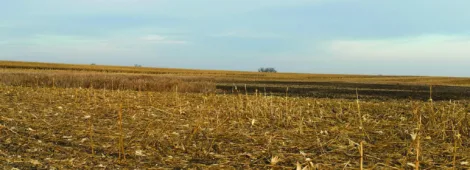
From my perch along the banks of the small creek that feeds into the Heart River, I listened hard for movement but heard little more than the moving wings of a group of juncos at dawn and the rustling of a cottontail hopping through the fallen leaves around my stand after first light. In previous seasons, it wasn't unusual to see 10 does and fawns make their way each morning from the dense brush toward the harvested cornfields around the bottom. This time of year, it was also common to see a buck or two in tow, adding antlered excitement to each outing as the rut ramped up. However, in both weekend sits, I saw exactly zero deer from my spot in the elms and boxelders of the small valley and began to wonder -- with the midge collection at home fresh in my mind -- if things were worse than I originally thought.
EHD is a virus spread by biting midges, like no-see-ums, to big game: especially whitetail deer. In multiple conversations with North Dakota Game & Fish Department veterinarians, big game biologists and other staff in years where the disease has been prevalent, the upticks in deer sickened and killed by EHD has correlated with drought conditions. In those dry summers and autumns such as this one, deer congregate around the last remaining water holes which have not dried up in the heat, and there they come into increased contact with the biting midges, and more of them do so, as the herd has fewer and fewer hydration options in the arid conditions. In those autumns with late hard frosts -- again like this one -- which kill the midges, the tiny insects live longer, biting and infecting more and more deer for a longer period of time. Eventually the virus load becomes too much, and the deer die.
While EHD does impact mule deer, pronghorn and elk, these species are generally less susceptible to it than whitetail deer. This year's emergency declaration by the governor and NDG&F to limit hunting of whitetail deer and offering refunds of tags for hunters in units affected by the resurgent disease is similar to previous actions, but unique in the mid-season limitation on harvesting whitetail does by bowhunters, as the state's population remains at a more than 50-year low point due to decreased habitat on the landscape and a tough rebound from harsh winters five years ago, and another outbreak of EHD about as far back.
While the midges may be the causation of the disease's spread, the greater correlation remains the lack of waterholes and habitat on the landscape. With each drained and tilled slough, and the conversion of swamp and grass that dried in the summer heat to marginally productive farming acres, we take away those safe spaces for deer fawning and those extra water holes which spread both the midges and deer out, limiting interaction, and arguably, transmission of EHD.
In ways we've seen the loss of habitat, and particularly wetland areas, play out -- mallard populations down by almost half in a decade, a pheasant recovery which has taken more than 10 years -- we see it now hitting our deer populations already at a historical low point. With fewer places for young animals to hide, and limited watering holes remaining in drought years driving an EHD uptick, that impact now comes for deer and serves as a reminder as to the value of all our grassy, swampy, slough-clad spaces.
One last strange correlation between the purple light covered in midges and a slow weekend on stand is that election day is just hours away as I write this. It's a good time to take stock of what you can do -- from the voting booth, to your involvement in sportsman's and conservation groups, to writing your senators and representatives for a new farm bill -- and make the realization that next in line, after ducks, upland game, and whitetail deer and all of our hunting opportunities, stands us, as the stewards of the land, to speak for them and their homes. That is, unless and until Zevo makes a giant, portable model of its UV trap, suitable for those last remaining water holes ... in our outdoors.