
Go where the grass grows
Trending
The first in a string of waterfowl production areas northwest of town was a small square, just 40 acres or so connected to the main road by a small walkable easement style strip with a two wheel track to access the federal parcel. I had walked it last fall while visiting the area, and to my surprise in the space just at the northern edge of the pheasant range, I had flushed a pair of hens as my dog got hot running the small draw up to a couple of willows on the edge of the just-cut field. We wandered around the prairie pond at the middle, which hosted ducks, geese and swans, stomping through cattails and sliding through field grass, turning the small space into a two-mile hike. I made the mental note and marked the place on my map for future reference.
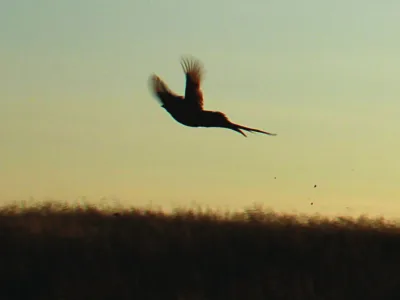
This year, conditions were similar with the golden carpet of corn chafe bounding the western border of the WPA, which was a solid stand of grass this autumn, likely spurred by idyllic summer conditions. A slight southerly wind sent us down along the edge of the winding cattail slough, working the adjacent grasses and the scent that the circular spin of my dog's tail confirmed was present once again. As we advanced to the far corner pinch-point, a hen rose as he pursued her into the green-and-gold vegetation along the edge of the reeds, and then another bird got up into the eastern sun.
Blinded by the glare of the perfectly aligned rays and unsure of the target, I traced the form of the shadow until I heard the tell-tale cackling of a young rooster. With the click of the safety, my bottom barrel blasted its salvo from my shoulder and the bird tumbled into the far edge of the cattail finger.It was only a matter of seconds and Ole had our quarry on the way back to my hand in the small space tucked between the black dirt fields. While I wasn't necessarily shocked to see the pheasants on this parcel again this season, I was pleasantly surprised to have one in the game pouch of my vest as a result of our trek into the grassy square.
It was once again a reminder that where a combination of habitat exists, preserved and protected for not only wildlife, but also for those who hunt, is where you'll find action in the field. Whether it's pheasants, deer, ducks, grouse or other game species, grass in the ground often equals punched tags and heavy game vests. In regions where farming often demands more from the earth, those spaces which leave parts of it undisturbed are where the game will reside, whether its size is just 40 acres, or 400, or 40,000. Wherever there is grass, or swamp, or forest, or, like the small pothole water we wandered once again, a mix of everything and a sampling of all, that's the best place to start when it comes to hunting.
Odds are, with a little study of an overhead map, and a bit more effort of wandering the yellow, or red or green squares of public access on that particular atlas, you'll find what you're after. Because beyond locating those colored spaces in a book or online, it's knowing that where the grass grows is what will provide you your best idea as to the likelihood of continued success ... in our outdoors.