
Shot suggestions and choke points
Trending
The early season flush of a sharptailed grouse - or better yet a nice group of them -- can provide an exhilarating rush to kick start fall in the field. As autumn progresses, however, the remaining birds learn fast, and once the sentry sharpie takes to the air at a distance, it's likely that the remaining members of the resident flock follow suit, providing a long-distance poke at best. For all upland birds, having the right combination of shot size and choke tubes in a gun can help increase success in the field regardless of species, but knowing what works best for you and your situation, along with your chosen field companion and point in the season is part of putting more birds in the bag.
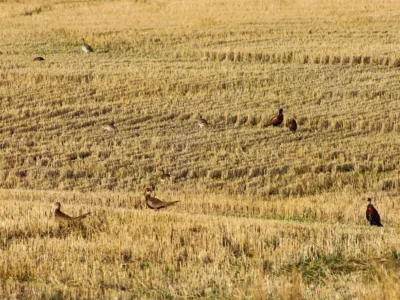
Ringneck pheasant
In early season, or behind a pointing dog, expect close flushes from roosters that are uneducated or held in place beneath the rock-hard stance of a pointer. Having a more open choke, such as improved cylinder (IC), will provide a wider disbursement of pellets to help better connect with roosters that get up nearby at the start of the season. Later in the fall, a tighter choke will help connect with spookier, far-flushing birds, so modified (Mod), improved modified (IM) and full (F) are good options. For double-barreled scatterguns, try IC-Mod pairings in October and early November, and Mod-IM or Mod-F in the home stretch of the season. Shot in sizes 6 and 5 will work well early and put these bigger birds down, and many hunters dial it up to a size 4 pellet load in late season. For Waterfowl Production Areas and other lands that require non-toxic shot, steel pellets in size 4 and 2 will work, but check to make sure the chokes are appropriate for those loads.
Sharptailed grouse
Sharpies are a bit smaller than pheasants and at the start of the season can provide some close-by flushes in bigger groups. A more open choke to start the season is a good idea, and a tighter one can be employed later in the year; consider going from IC to Mod to F as the fall progresses into winter, especially for those flushes that are farther away near the end of the year. Sharptailed grouse aren't as tough or as big as pheasants, and need less of a hit to bring down, and shots in size 7.5 or 6 will work well early in the autumn, with 6 being the norm after October and that same shot doubling as an effective pheasant load when the birds are found in adjacent habitats once both seasons are open.
Ruffed grouse
Ruffies are a bird of a different feather and of much different habitat that the two previous upland species. As a result, they require a much more open shot pattern to connect with on the wing. Often close-flushing, thunderbirds quickly try to put space -- and structure in the form of tree trunks, branches and foliage -- between them and pursuing hunters. Thus, getting the most possible shot out there is key to connecting. Wide open chokes, like skeet (S), cylinder (C) or IC are a great option for these near-flushing birds. It doesn't take much to bring them down and one or two pellets connecting is all that is required, so putting the most lead out there in as wide of an area as possible as quickly as one can is the name of the ruffed grouse game. Resultantly, shot in sizes 8, 7.5 and 6 rule the day for ruffie hunting, and are also effective on woodcock which are sometimes encountered on the same logging trails and aspen edges of the north woods where ruffies reside. For double-barreled shotguns, consider a S-IC setup for early season, and an IC-M for later in the fall when the leaves have come down. As an important note, those commercially branded loads designed and marketed for pheasants with tighter-holding wads and slimmer patterns downfield should be spurned in favor of standard shotgun shells for ruffies, if you're making a trip into the woods from the prairie.
Hungarian partridge
Huns are often encountered in conjunction with both pheasant and sharptailed grouse hunting adventures, but typically more so with the former, due to both species being fans of agricultural edge areas. Choke tubes in IC and Mod are suitable for these flock-flushing birds and will put out a pattern capable of taking them down throughout the season. As the smallest of the "Big Four" upland species, partridge require smaller shot and sizes 8 and 7.5 are most effective, but 6 will work in a pinch or in concurrence with a pheasant hunt for an effective dual-purpose load.
Canine considerations
Species pursued behind pointing dogs will generally allow for a more open choke as hunters can walk up on a held bird and have the option of taking a quick shot or waiting for one to present itself. Knowing your breed and specific habits of mixed-talent dogs, such as pointing labs that also flush in cover, and the areas to be explored can help with choke tube decisions. Adjust chokes down a step (ie: Mod to IC) when hunting behind pointing dogs and tighten them up a bit (ie: Mod to IM or F) when following flushers in the field.
Remember to pattern out all chokes at various distances with the field loads most frequently used and write the results down and create paper targets with life-size silhouettes of each species pursued. Making a chart or a graph of the various patterns and the number of pellets hitting the target at each distance will help provide a visual record of what shot size and choke tube to use in each specific situation.
Put in the time right now ahead of pheasant opener, or learn from time in the field chasing grouse in the early autumn to make these determinations and it'll become apparent that knowing the right shot and choke for the situation and species makes good shooters great and great shooters the envy of everyone else ... in our outdoors.