
Sliding scale
Trending
All waters are different, and expectedly, the fish available in each one are different as well. Not so much in their general characteristics -- big fish still eat little fish, or at least littler things, and are affected by environmental changes -- but the crappies in one lake might be bigger than another, or the bluegills in a smaller pond might be slightly smaller simply due to the factors that influence their lives and the food they may have available. When fishing these varied places from a small prairie lake to a large Canadian shield water or simply jumping a road from one lake to the next one, each water has a sliding scale of sorts.
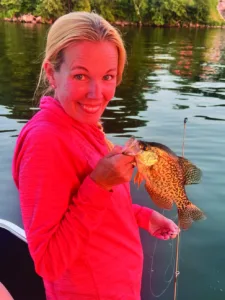
Take for example this weekend. After my wife alerted us to "a good one" on the line while crappie fishing, I saw the bend in her light action rod and figured it must be a small bass in the mix with the specks we were searching for. From my position at the front of the boat, the splashing, turning and rather large mouth of the fish initially confirmed my response, until I realized it was actually a dandy slab for our water. Hoisting it up over the edge of the boat and onto the measuring table atop the livewell at the stern, the black crappie taped out at just over 12.5 inches, our biggest of the summer and perhaps the largest I've seen caught on the lake in the past handful of seasons - certainly worth a photo before she set it back into the water and got back to casting her krystal flash jig.
On our high-traffic, high-pressure water, where big panfish come at a premium and are highly sought after, especially by ice anglers in the winter, catching a good sized crappie means hitting the 10-inch mark. Eleven inchers and up are uncommon, and it starts to become a rarity to see a speck hit a foot in length. On the region's best crappie lake just 15 minutes down the road, a minimum length limit of 11 inches keeps the fish gargantuan in comparison. Top-end crappies routinely touch 14 inches and there are some that go over 15 as well. Meanwhile, on some of the smaller lakes in between, it's tough to find 10-inch fish. Over just 20 minutes of driving, you can expect to find varied expectations of what you'll catch, and what counts as a big one on each lake.
The same holds true for bass and pike as well as panfish. Smaller lakes have less for predator species to eat, less space for all fish to roam, and less shallow water and shoreline vegetation for young-of-the-year fish to hide in. Water type and quality can vary from spot to spot, even if they're just a few miles apart. All these factors and more come together to make for varied expectations on a water, but none should influence the joy that comes with fishing. A three-pound largemouth might be a big one on a 40 acre lake and worth a happy dance on the bow and a photo, while it might just be the average on a 4,000 acre water, and that's important to keep in mind.
As you finish out the summer exploring new waters, or perhaps just sticking to your favorites, remember that catching a "big" fish might mean different things in different places. Whether it's the 12-inch crappie or the 15-incher, it really doesn't matter. Keep things in perspective as you apply your sliding scale from lake to lake and note that a remarkable catch often comes down to the bounds of the water you're fishing and the expectations you place on each outing ... in our outdoors.