
Trending
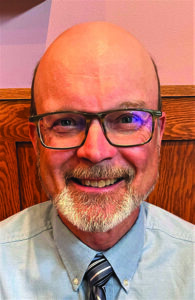
We have been learning about David Hansvick, who grew up in Vesta during the 1950s and '60s. He began his education at Vesta Elementary School, but had to continue his education at Redwood Falls Public Schools. That transition was a challenge.
"In 7th grade we got bused to Redwood Falls and you went from six kids in your class to 151 kids in 7th grade. You went there only knowing those six kids. The smartest (kids) went in Section 7A and the ones they didn't know what to do with they put in Section 7E. They put all the Vesta kids (Dave chuckled) in 7E. My parents said, 'No. We don't want him in 7E. He can move.'"
Dave had walked to his Vesta school, but now getting to school was a big deal.
"They picked up kids outside of Vesta first and then they'd pick us up. We'd meet in downtown Vesta and by about 7:20 we were on the bus. Then we picked up more kids on the way."
Dave remembered encountering other major changes in his new school.
"Every period you moved and you didn't know the kids. You weren't used to 30 kids in this class and then 30 kids in that class and most are totally different. It was really hard! We had gym class when we had never had an organized gym activity! They're giving you your white shirt and red pants. You are thinking, 'What? We've got to change clothes here?' You've not done any of that ever!"
Dave's school transition was traumatic those first couple weeks, but his older sister, Christine, helped him.
"I'd come home and did not want to go back to Redwood, but I didn't know what else to do! I asked, 'Can't I go to Echo?' My sister was in 9th grade when I was going into 7th grade. (So, she'd help, saying), 'Well, you're going here (a particular classroom) next.'"
He found his footing, but challenges continued to limit his school experience.
"It took three or four weeks and then things became pretty good. I met two of my closest friends in 7th grade and I still keep contact with them. But other kids had all these after school experiences when we got on the bus and came home. You didn't have a lot of activity with any of these classmates at the time and it was hard not doing sports. (They'd ask), 'Why don't you come out for basketball?' You'd say, 'Well, we only have one car.' Ironically, for most Vesta kids the kids you got to know best were the farm kids from Redwood Falls because they didn't go into town either."
Dave described his new school.
"It was called the Lincoln School and was close to downtown. It was about three blocks from the athletic fields where you'd run for gym class. Junior high was mostly on one side of the school. There were two floors and there was a basement on part of it. It was huge and already seemed old at the time I was there. You had to share the gym that was more in the senior high part. We'd eat in the cafeteria. It seemed like an awfully big place, but when you got all six grades there from 7th through 12th, that was pretty hectic."
He recalled two of his junior high teachers for very different reasons.
"Miss Daily was a math teacher and that was one of my first classes as a 7th grader from Vesta. I think I was kind of scared of her. Mr. Hall, my history/social studies teacher stood out. Even now I like to learn about history. I think that came from Mr. Hall."
That first fall at Redwood Falls Junior High brought another trauma.
"I remember hearing in 7th grade social studies class that someone shot the president in Texas. (Later) we came home and my mom took us to our empty church and we sat in there. She was really upset. I was thinking, 'Oh, my gosh! I've never seen my mom cry like this.' That was difficult."
Looking back, Dave sees how those years brought richness to his life, especially in his two best friends, Steve and Fred. But they were just the closest of a new group of friends.
"I became good friends with a lot of people like Steve Nelson, Fred Bruninsky, Don Helger, Don Gustafson, Gary Mineart, and Darryl Schmidt. It was really nice and something new to me, coming from Vesta, to find there are lots of friends here you could get to know."
These junior high years were also when Dave began working for pay.
"A farmer wanted me and my brother to pick rock one spring. Vern and I went out every day after school and picked rock for a couple hours. It was hard work. (Dave chuckled) Our goal was to make enough money to buy a Schwinn bike. We got done after two weeks and he said, 'I usually pay 65 cents an hour.' Well, that was not very much money back then (Dave chuckled) and we didn't make enough to buy that Schwinn bike, yet. We had a couple other jobs walking bean fields. That was so much easier than picking rock because you had a five-gallon pail to fill and when you are 12 or 13, hauling this pail of rocks was hard. But we would work whatever they had for us."
Dave had more confidence entering high school and had developed a wider circle of friends.
©2026 William D. Palmer.