
A quick fix
Trending
"Jackson, where's your bobber?" I asked, squinting against the gray surface of the evening water, knowing that my eyesight isn't quite what it used to be but also expecting to easily see the electric red glow of the light up slip float 30 feet off the stern.
From the back of my brother's boat, my question interrupted the back and forth between my youngest boy, his older brother, AJ, and their cousin, Soulvie. We all looked for a second, and he began reeling, the red light of the illuminated float still not visible, but a bend in his fishing rod -- an old standby bobber option we keep at the cabin -- suggested the slipfloat had not simply sunk.
While plenty of fish showed up on my brother's sonar on the rise along the south side of the lake in front of the family cabin, they were in a fickle post-spawn state with the world warming up around them, so the tug at the end of the line was a welcome experience and Jackson lit up excitedly like the glowing bobber set at about 10 feet up his line. Then came a cry of frustration, "It's not reeling anymore," he reported, dismayed.
Looking at his spinning reel, I could see why.
The monofilament had become tangled around the base of the reel, possibly from a wind knot or just loose line coming in excitedly with a fish below swimming around with the hook in its mouth. He passed the combo over to me and I made a quick diagnosis of the situation. Knowing the fish would likely be lost either way -- through a busted line if it ran, or simply just cutting the mono with its teeth -- I spun the top of the old spinning reel loose to find a massive tangle on the pin which centered the spool. As judiciously and gently as possible, I worked the loops free of the axis, with a couple of notable knots and a few concerning dings in the line coming off as I lifted it free and slipped the spool back into place. Spinning the top back onto the reel, I tightened it up and turned it a couple clicks back, to make sure there was a bit of give in the drag, just in case the fish would be there when I was done.
Guiding the line back onto the spool as I cranked the reel, I fed a couple of small loops under the wraps and felt the areas where the tangle had damaged the line become secure under several feet of stored filament, noting I'd have to set a new stretch of line on the combo for our next outing. Lifting up on the rod, I felt the weight still below and handed it back to my son.
"The fish is still there," he exclaimed as the minute long pause in the battle came to an end and the shaking continued below.
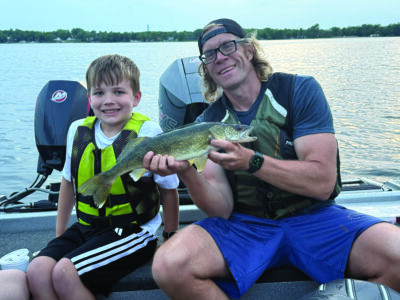
With a few hearty lifts and a laugh, a nice walleye slid over the basket of the net, and I raised it into the boat. With the red number six hook placed firmly in the corner of its jaw, it would be our only one of the night but it came with a story and another lesson on the water, which I explained after the adrenaline of the in-the-moment fix and follow-up catch came to an end.
No matter how bad things get, no matter how often Murphy's Law stacks against you, and no matter how tangled a line can be, there's always a way around it, and sometimes the fish sticks with you. Finding any fix -- be it the right one, or just one that gets the job done in the moment -- is sometimes part of the equation, no matter how prepared you are, or how good of a condition your equipment might be. And that, sometimes, produces the most memorable fishing stories ... in our outdoors.