
A spring slant
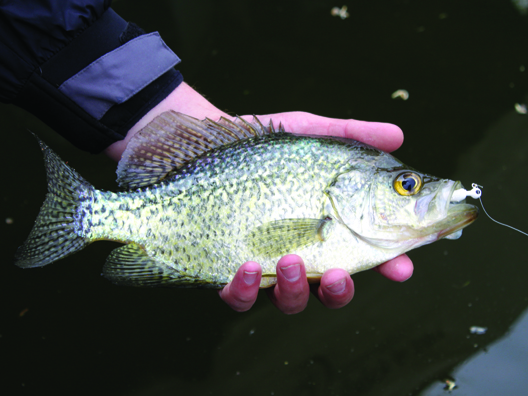
Provided photo Crappies will stage along northern bays as the ice comes off area lakes, making forays into the warming water to set up for the spawn that comes later in May when things warm into the upper 60 degree range.
By the time afternoon rolled around on Sunday much of the eight inches of snow we received on Friday and Saturday — as part of some cruel April Fool’s joke mother nature likes to play now and again on our region — had melted. While it made the extra effort I had put in to clear the driveway and sidewalks (hopefully) one last time for the season seem superfluous, the sunlight was welcome and the increasing angle of its rays did the trick with some wind gusts to melt most of the accumulated precipitation from the yards around the block. This time of year, it’s that sun angle that not only saves us from the drifts left behind by freak spring snowstorms, but also sends signals to fish in area rivers, and eventually once the ice peels away, our lakes, that it’s time to get moving for both food and begetting the next generation. Focusing in on those areas hit by the more intense light of a strengthening sun as the season wears on is paramount in finding more fishing success, both now as flowing water options are available, and those favorite still water selections such as ponds, impoundments, and ultimately, larger lakes open up.
Time and place
On warmer, sunnier spring days, afternoon and evening fishing options are most often the best time periods to get out after pre-spawn walleyes and pike as the water warms and fish become more active, in those places like North Dakota where year-round angling options exist. As cold-blooded creatures, their vigor is often dictated by just how warm the water is around them, and as sunlight heats up the shallows, they’re more apt to be on the prowl for food around their spawning periods, or when recovering just after.
For those exploring those first ice-free lakes and ponds for panfish to fill the void in Minnesota, looking north on each just-opened body of water is key for crappies. Northern bays, especially those with dark or mud bottoms, will draw crappies closer with each stable day that comes in the season as sunlight warms the waters and suggests the spawn isn’t far away. While slabs will likely make forays into these skinnier spaces over the next several weeks, they may stage nearby in deeper waters as well, going back and forth as the water warms and cools with the daily cycle or shifts in the weather. This again makes afternoon and evening in these northern bays and coves the best places to start the openwater season for specks ahead of their spawn.
With sunrise occurring earlier and sunset getting later each day, time to be on the water is also expanding as the rays of warming light become more direct. This extended photoperiod also triggers changes in fish as they become more aggressive and mobile to stake out their favorite spawning sites while the water warms. Catch them in transit as they lock in on their spots and make their seasonal moves, noting that each species tends to mate based on water temperature; with pike spawning in that 40 to 45-degree range, walleyes preferring 48 to 54 degrees, and crappies coming later in the season when things warm into the upper 60 degree range. The changing slant of sunlight in spring is just one of many seasonal shifts that influence the angling world around us. Use that angle, the extended amount of daylight and the impact both factors have on water temperatures and fish behavior to find those favorite spring species and more success … in our outdoors.
Local Columns
Let your sun shine
For the first time in many days, the sun is shining! What a welcome sight! I'm sure all the budding plants are ...
A spring slant
Preventive health and immunizations
Every parent wants to do what’s best for their child, but sometimes those decisions are difficult. It’s ...

On the Porch
Digging for treasure
My brother Les, his son Dustin, and I recently embarked on a treasure hunt. We didn’t have a map like the Count ...
First AI glance didn’t measure up to the art of writing
In the past week I had my first chance to experience AI (artificial intelligence) through my email ...