
Spring cleaning
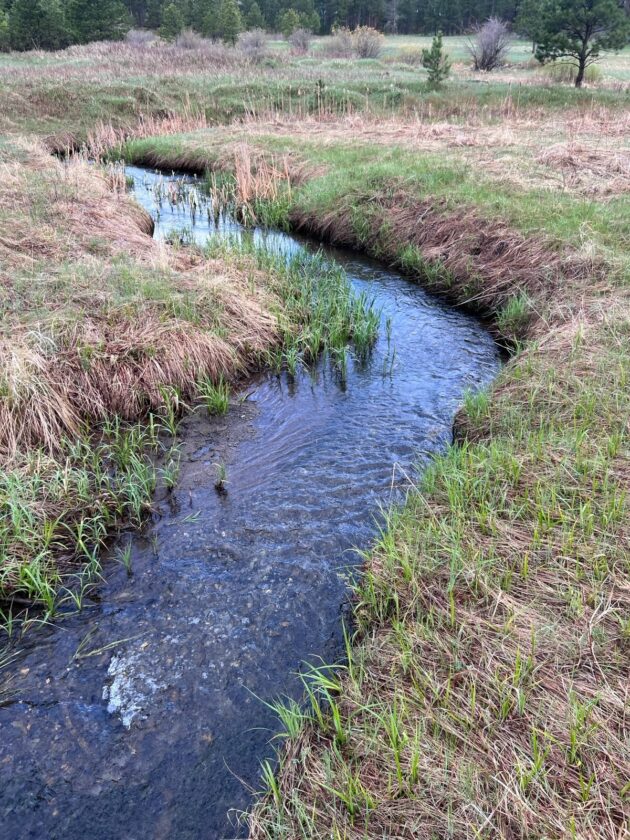
Provided photo Small flows lead to bigger waters, and removing trash upstream improves things downstream. Little spring efforts like litter cleanup go a long way in improving angling, hunting, and overall aesthetics of outdoor spaces.
Last week’s warmth brought with it what I can only hope is the final melt of the season, despite knowing that Mother Nature always has a few wintry tricks up her sleeves, even well into May. For that reason, the Minnesota fishing opener always serves as the “safe point” on my calendar for running the snowblower dry and putting it away in exchange for the lawn mower. But in what I envisioned was Teddy Roosevelt style, while working through the end of what I also hope is also my final head cold of the season, a vicious double-lunger with body aches and balloon-head congestion, I managed several walks around the neighborhood to get my body right through TR’s Strenuous Life plan.
While I wasn’t running, as I wanted to be in the calm early mornings, or fishing, as I longed to be in the 70 degree highs of the afternoons, I found solace in picking up a couple plastic bags worth of cans, cardboard and other debris that had blown around in the northwest winds which winter had sent down the hill and into my favorite walking trails in the ravine near our house. With the energy I had, the impromptu cleanup effort felt like a good workout with an even better payoff for the aesthetics of the area and likely prevented those items from making their way into the creek, and ultimately the river downstream, following spring’s first good rain.
Spring’s arrival is always a reminder that trash is trash everywhere; and in opposition to Taylor Swift’s theory, it doesn’t always take itself out. Instead, it falls on citizen conservationists, hunters and anglers to keep a wary eye out as their favorite spots open for spring activities help in that process. Those river bends that hold prespawn walleyes also tend to bunker the discarded Styrofoam blocks and aluminum cans in the dry grasses on their shores. Up the banks and in the trees of those riparian areas where tom turkeys are starting to strut with the season’s onset, carboard boxes and plastic wrap form unnatural lean-tos against their trunks. Even in the dirt and grit of the cement gutters of any neighborhood are countless items of litter which left unchecked can quickly end up downstream, or with time, in an ocean thousands of miles away. Perhaps worse, they can be ingested by or tangled around the bodies of birds, turtles, fish and other creatures who certainly deserve a better fate. If you’ve seen just one animal impacted by a six-pack ring, a discarded wad of monofilament, or the handle of a plastic bag, you know that potential impact becomes terribly real.
That’s why this spring, no matter where you are as a hunter, angler, conservationist, or perhaps just a citizen who likes seeing robins, foxes, frogs, and other wildlife — on a walk in town, out hunting in the country, or casting that first line on a favorite water — you have an opportunity, and I’d say the responsibility, to pick up trash when you find it in those spaces that draw you outside and bring you spring joy. One or two pieces make an impact; a couple grocery bags worth does even more; a full 13-gallon trash bag and things really get going. Join a road cleanup, a river cleanup, or simply recruit your kids or friends to police the neighborhood as the season settles in. A pair of rubber gloves and a receptacle is about all that’s needed to make short work of what last season has left behind once the snow is gone. In the process, the immediate area and those downstream will be better off and ultimately, so will the health of our wildlife and the quality of your hunting and fishing experiences that are to come in the next few weeks, and years down the road … in our outdoors.
Local Columns
Let’s work together and bring forth peace
We never seem to learn. During our nation's history, there have been quite a few times when war was chosen over ...
Spring cleaning
Spring in Southwest Minnesota — a season of renewal and community impact
As spring arrives in southwest Minnesota, it brings a welcome sense of renewal — and a moment to reflect on the ...
Forty-five years on
My wife and I recently marked our 45th wedding anniversary. This is a mathematical impossibility as I feel as ...
Humble pennies had value that’s now a distant memory
If we had a conversation about things that get no respect, one of the first items that should be mentioned is the ...
I like words
When you write an occasional column, you think about words. I like words. I try to find the right ones whether ...