Rural townships remain vibrant in the 21st century
Townships in the region have changed a great deal in the past 50 years, but they’re still important places with a good quality of life.
Their vitality is clear in at least several ways. They’re valuable for housing, local government, and in some cases churches and stores.
Over the years there have been rumblings about eliminating township boards or taking steps that minimize their role. That should never happen. Some indications suggest that townships could become more important rather than less.
Population totals have fallen in most rural townships because of declines in the number of farm families. There used to be at least two farm sites in most land sections, sometimes even three or four.
Farming an entire section used to mean that someone had a big farm. Now it’s a frequent occurrence. Some farmers who farm one section try to augment their incomes by buying or renting additional land.
The main exceptions to population loss involve townships with lakes or a close proximity to sizable communities. The townships outside Marshall (Lake Marshall, Fairview, Grandview and Lynd) have totals of more than several hundred residents each.
Many of the residents are non-farmers. They want acreages in the country because they can have more space between themselves and their neighbors than they can with a house in town.
That trend has been expanding outward to places further away from regional centers. The distance often makes an acreage more affordable. We’re seeing fewer abandoned farm sites because people are living in them. They’re renovating the old houses. They use farm buildings for storage or hobbies.
It’s created new issues. Grass fires can potentially cause damage to larger amounts of rural property. Wellhead protection is important since many rural residents belong to rural water systems. Feedlots are more difficult to expand because of concerns such as odors and truck traffic.
There are also ordinary needs such as winter snowplowing and occasional ditch maintenance. It’s vital that the concerns of both farmers and non-farm rural residents are heard. Township board members play a needed role in getting good things accomplished.
Some needs at the township level are social rather than political. Even though acreage owners want plenty of space, they often still want to know their neighbors.
Some still do it by belonging to a country church. We still have examples such as the St. Lucas church between Marshall and Clarkfield, Zion Lutheran Church west of Lynd and others.
It’s true that we’ve lost some rural churches. Catholic congregations have closed in places such as Green Valley and Taunton. The Minneota area used to have three Icelandic Lutheran churches but now just has St. Paul’s within the city limits.
The future will depend on young people. They can follow the recent trend of going to town for church because the town churches have Sunday schools for kids. They could instead potentially decide to reactivate Sunday schools near their rural homes.
The same idea holds true for country stores. Except for the Marble Store between Ivanhoe and Canby they’ve mostly closed up. It would be difficult to bring them back, but maybe something like Saturday morning coffee and donuts at town halls could fill the void.
It’s important that new residents and longstanding residents accept each other. New residents should be welcomed as neighbors. At the same time, the new people should realize that they can’t change everything, at least not overnight.
In townships and small towns lots of people will say that a newcomer lives in the previous owner’s house. It takes about 20 years before a family, even one that wants to play an active local role, stops being a newcomer.
Some new residents might respond by keeping their distance. It’s better if they see the social tradition as a sign of community spirit, a part of the local charm.
Once people know them, they make lifelong friends. There’s a real sense of unity. Economic trends have proven it many times. In difficult circumstances, everything from the early 1980s farm crisis to the Midwest flood disaster in 1993, people have wanted their neighbors to stay. If they stayed, everyone else would stay.
The things that made rural America great should continue in modern times. It’s important to keep the work ethic, the faith and the family.
It’s easy to say in a newspaper column. Those of us who believe in it also need to act. There’s a need to make our traditions part of our way of life. We should set examples for young people and newcomers.
— Jim Muchlinski is a longtime reporter and contributor to the Marshall Independent
Local Columns

Kulla speaking up on Main Street
Biodiversity has value for our region’s natural landscapes
This summer I’ve noticed for the first time some widespread effects of Emerald Ash Borer in the Marshall ...
‘Beautiful game’ around the planet
I have followed the World Series since 1965; the year the Dodgers beat our Twins. I was 9. As I got older, I ...
On the Porch
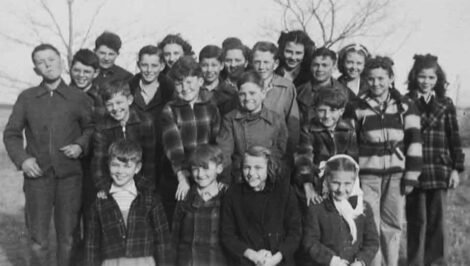
Country School Kids – Karen Drury Rafson – Attending District 75 in Stanley Township