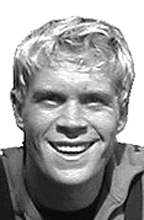
The Vietnam War – Ray Fox – A Marshall infantryman learns about patrolling in Vietnam
We’ve been learning about Ray Fox’s service as an Army infantrymen to help us better understand the Vietnam War’s impact on our region.
Ray was drafted into the Army in 1967 and trained at Fort Campbell, Kentucky, and Fort Polk, Louisiana, before boarding an airliner full of Vietnam replacements in June 1968. The Army assigned him to the 29th Infantry “Americal” Division, which was operating north of Saigon in Vietnam’s central region.
Ray’s new unit, the 2nd Platoon of A Company, 1st Battalion, 6th Infantry Regiment, part of the 29th Infantry Division, was located then at an artillery fire base on Hill 54, named for its elevation on tactical maps.
Ray described the fire base, “There were bunkers around the whole hill and inside the (line of) bunkers there would be eight inch artillery and 105 and 155 (millimeter) artillery.”
Ray smiled, remembering that first base.
“There used to be a TV program called ‘Car 54, Where Are You?’ We called it, ‘Hill 54, Where Are You?’ We’d be there two weeks and then we’d go to another base or out in the field. So, it really wasn’t my home. We called that ‘the rear,’ that fire base. Other guys called it the front lines, but we called it the rear because it was relatively safe. We weren’t traipsing around in the bush”
Ray explained that the war became real soon after he arrived at Hill 54, “I probably spent one night in a bunker and then my second day we were out on patrol.”
Ray was scared about his first combat patrol and uncertain what to do. “I talked to a vet,” he recalled in a voice breaking with emotion, “I asked him how much ammo do I carry — what do I do?” The veteran’s answer was not reassuring. He told Ray to bring along as much ammunition as he could carry.
Ray described his load on that combat patrol. “I carried nineteen clips (of ammunition), one Claymore (mine), 100 rounds of machine gun ammunition linked together, four hand grenades, three days’ rations, and five quarts of water.” Ray also carried his M-16 assault rifle, a towel, at least one pair of dry socks in a plastic bag, a T-shirt, a nylon blanket and a poncho. He continued, “We estimated (our full load) at 90 pounds when we first went out.”
That first patrol started with a medical assistance visit to a local village. Ray stood next to the platoon medic while he treated Vietnamese kids. Ray recalled what happened next, “We left the village and walked two or 300 meters to a grove of trees.” The grove was surrounded by dry, brown rice paddies. “Just as we arrived, we spotted 80 VC (Viet Cong insurgents) in the open,” Ray remembered, “I thought, well, this will be my first and last patrol. They could have walked through us because we were a platoon and our platoon size was 18 to 25 people.”
Ray’s unit called in artillery and the first round scattered the enemy soldiers. Artillery fire continued and helicopter gunships hit the area. American artillery kept firing through the night. When Ray’s company searched the area the next morning, they found no bodies.
That patrol taught Ray that even eating in the field demanded awareness of possible dangers.
“That night I ate a can of something and rather than set the can down, I threw it at a bush. I got my butt chewed in the morning. You don’t do that. They thought it was a hand grenade attack. So, in the morning I got to walk point.”
He described walking point.
“I’m leading the column. I had no idea what I was doing; no idea where I was going. I’d look behind and they’d point. It was kind of like deer hunting. You’d look for signs or broken branches. I never did find anything, but that kind of helped me walk point because we were hunting human beings is all we were doing. What they tell you is put your rifle on full auto and if you see anything, just hit the ground and pull the trigger. Luckily, nothing happened.”
That first patrol changed Ray’s role in the platoon.
“After I walked point the platoon leader found out I went to college and he said, ‘How would you like to be a radioman? You won’t have to walk point anymore. You won’t have to carry a Claymore; you won’t have to carry machine gun ammo; and you’ll be the second-to-last person in the column.’ I said, ‘I’ll take it.'”
Once Ray became a radio telephone operator (RTO) he carried a 15-pound backpack radio and extra batteries while patrolling in addition to his other gear. But he no longer walked point or carried the platoon’s heavier ammunition. What Ray’s Platoon Leader failed to tell him, however, was that an RTO had to go on nighttime observation posts/listening posts (OP/LPs).
Ray learned his new responsibilities and settled into the platoon’s patrolling routine, spending far more days in the field than at any firebase. The platoon’s soldiers only went to the Division base camp at Chu Lai for the hospital; for Rest and Recuperation (R&R); or when they were returning to the U.S.
The Lyon County Museum is organizing an exhibit about the impact of the Vietnam War on Lyon County. If you would like to share Vietnam experiences or help with the exhibit, please contact me at prairieviewpressllc@gmail.com or call the museum at 537-6580.
Local Columns
Personal bucket list changes with the passage of time
It’s rare when a movie sums up a concept so well that it becomes applied to the lives of almost everyone. One ...
Country School Kids – Charlie Hettling – Beginning school at District 79
On the Porch
Remembering Dave
In Check