
Grasshoppers brought disaster to Lyon County
Part IV:
Lyon County residents were finally forced to admit that they needed aid and finally made application for a portion of the $5,000 appropriated. The Saratoga settlement received $250 from the governor in early March which was distributed among the needy.
Many of the county farmers did not have enough seed grain for the spring of 1874, so in February the Legislature appropriated $25,000 for supplying the need. Lyon County’s share of 1,128 bushels was received in March and distributed in April. Applicants received only a part of the grain asked for due to the great demand. Each township received anywhere from 30 to 102 bushels of wheat.
In May, the grasshopper eggs began to hatch. “The process of hatching was interesting. In each nest, a half inch or more below the surface of the ground, invariably laid in hard earth, were from twenty to fifty eggs. When the sun warmed the ground sufficiently to hatch the eggs, the pithy covering of the next popped off and a squirming mass of yellow hoppers poured out. Each was encased in a sort of shell or skin, which it immediately began to pull off. Then, after taking a moment’s view of the world, each little hopper hopped away in search of something to eat. At birth, they were about a quarter of an inch long and had no wings, but these developed rapidly. While the pests had been considered numerous the year before, there were now more than ten times as many. The appetites of the youngsters were good, and they began their ravages as soon as the first tender blades of grain appeared. Whole fields were stripped entirely bare in those parts of the county where the hoppers were most numerous, notably along the Cottonwood in the Saratoga country and along the Redwood in the Lynd country.”
“During the closing days of June most of the Lyon County hatch departed. Several days were spent in swarming and collecting, and then they rose in vast clouds, filling the air as far as the eye could reach, and sailed away to discover new worlds to conquer.
During this period, each day from ten o’clock in the morning until three in the afternoon, the air was filled with the winged emigrants. With their departure, it was hoped the ravages of the year were at an end, but it was not to be.”
During the month of July, the county was invaded by “foreign” grasshoppers that came from the southern counties. Again, they arrived in cloud-like formations that were blown this and that way by the direction of the wind — disappearing and then returning. These pests attacked fields in the county that had not been damaged by the “native” pests in June. About the middle of July, the invaders having destroyed most of the crops, disappeared entirely.
(To be continued)
Local Columns
First AI glance didn’t measure up to the art of writing
In the past week I had my first chance to experience AI (artificial intelligence) through my email ...
Signs of spring as Easter arrives
Spring comes in spits and sputters. A beautiful sun-basted day is followed by howling northwest wind, followed by ...
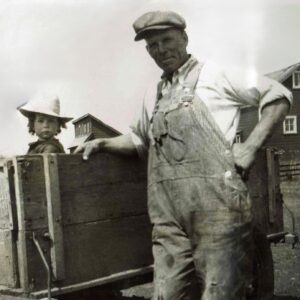
Country School Kids – Bonnie Jean Davis – Beginning on a Lynd farm
A number of administrative priorities in 2026
While there are many capital park, street and wastewater projects happening in the city this year that were ...

Stocking up on fun
Why pay the price?
How would you handle the following situation? I wanted to buy a new pair of hiking boots, and went to a local ...