
Hennen, Seifert greet voters
GOP candidates say fraud, affordability remain top concerns
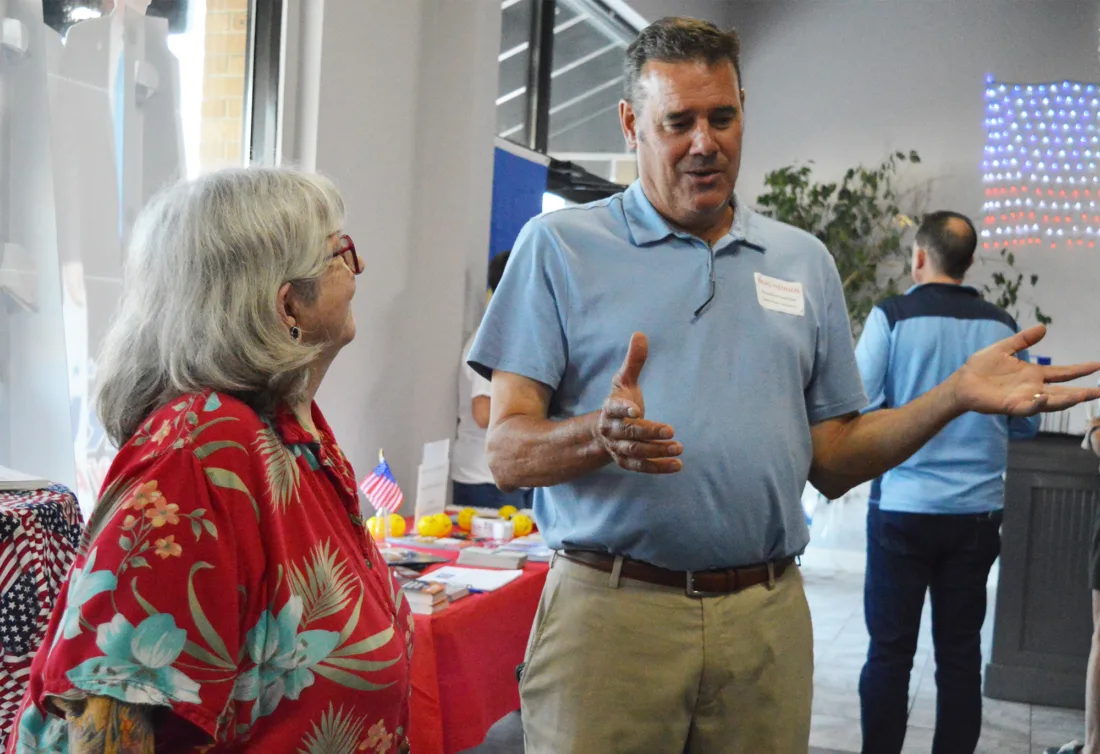
Photo by DebGau Brad Hennen, who is running as a Republican for Minnesota state House in District 15A, met with area residents during a meet and greet event in Marshall on Monday.
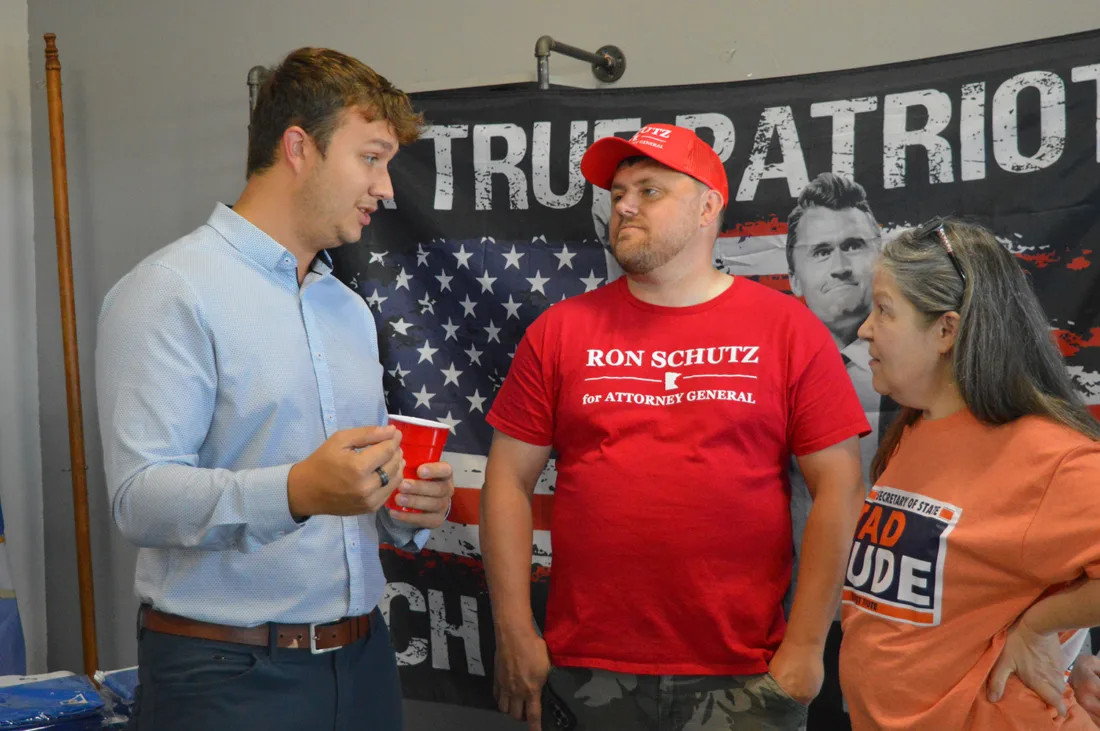
Photo by Deb Gau Braxton Seifert, who is running for Minnesota state Senate in District 15, said he's heard a lot of concerns about fraud and the cost of living in Minnesota. Seifert met with area residents during Monday's Republican candidate event.
Photo by DebGau Brad Hennen, who is running as a Republican for Minnesota state House in District 15A, met with area residents during a meet and greet event in Marshall on Monday.
Photo by Deb Gau Braxton Seifert, who is running for Minnesota state Senate in District 15, said he's heard a lot of concerns about fraud and the cost of living in Minnesota. Seifert met with area residents during Monday's Republican candidate event.
Trending
MARSHALL -- Republican candidates for the Minnesota state Legislature said they've spent the summer trying to hear from as many area residents as possible.
"I've been either campaigning or meeting with city officials in, so far, 34 of the 50 cities in the district. And my plan is to make it to all 50," said Braxton Seifert, who is running for Minnesota state Senate in District 15.
Brad Hennen, the Republican candidate for Minnesota House District 15A, said he had seen a lot of support so far on the campaign trail.
"I'm fortunate that the district is a good fit for me," he said. "The acceptance and the support has been very strong."
Hennen and Seifert with members of the public during a meet and greet event Monday night at the Republican campaign headquarters in Marshall. Seifert, a Marshall resident, is running for the state Senate seat currently held by Gary Dahms. Hennen, a Ghent resident, is running for the House seat held by Chris Swedzinski. Both Dahms and Swedzinski announced this spring that they will not be seeking re-election.
Seifert said Monday that he has been trying to meet people and local officials all across SD 15. Regardless of background or political affiliation, constituents "have got their own ideas, and their own needs that need to be heard," Seifert said.
"The biggest issue that I continue to hear is fraud and affordability for Minnesotans," Seifert said.
He said one topic he has been discussing a lot has been the $9 billion in fraud that Republican officials have said has been found in Minnesota.
"The $9 billion that Republicans throw around a lot is according to Joe Thompson, with the U.S. Attorney's Office. I think it's important to quote that, you know, that's an actual person from government, that's not just a made-up number."
When it came to affordability, Seifert said lessening state regulatory mandates would help Minnesotans. One example was mandates like green energy legislation passed in Minnesota.
"This 'Green New Deal' that Minnesota passed in the last DFL trifecta in 2023, that has pushed new mandates that are driving housing costs up, and I see it in my own energy bill on my farm and in my small business," he said. "My energy prices are up 25 to 30% right now from what they were a year ago, and up to 40% in the wintertime. So we need to be looking at an energy strategy."
"We need to stop having St. Paul shove mandates down our throats, and we need to go to an all-of-the-above strategy," instead of strictly energy sources like wind or solar power, he said.
Changes in regulation could also help with the availability and affordability of crucial services like child care, Seifert said.
Hennen said affordability was also a key concern he was hearing from area residents.
"I think what's top of mind in most everybody's perspective is various cost of living issues," Hennen said. "They're worried about inflation, they're worried about the cost of food. They're worried about the cost of fuel, of education, the cost of health care, all these things."
Not all of those problems can be solved at the state level, Hennen said. However, he thought there were things Minnesota state government could do to help ease the burden. One example could be in the realm of rising health care costs.
Hennen said that in his lifetime, the approach of the government has been to regulate the health care and health insurance industries.
"All these regulations essentially serve to restrict the supply in one small way or another. And when you restrict the supply of something, you necessarily cause the price to go up," he said. "And then because the price has gone up and brings it out of the reach of a lot of consumers, the government's response is 'Well let's subsidize it. We'll help you pay for it.'"
"Neither of those approaches, neither regulating nor subsidizing it, helps to improve the availability," he said. "I believe that fundamentally we need to change the approach that we take with government, in that our actions should serve in one way or another to help improve the supply - increase the supply, improve the availability of it."
He said that could mean reducing regulations, or other steps. That approach could be taken with health care, business or in other areas.
"If our efforts go toward improving and increasing the supply, then we've got a better chance of lowering that inflationary pressure," Hennen said.
Whether the state Legislature will be able to work to ease that inflationary pressure, will depend a lot on whether there are like-minded people in the House and Senate in January, Hennen said.
"I'm going to need to be able to make my case to more than just my constituents," he said.
Hennen said he also wanted people to know he was accessible, and would advocate for residents in District 15A.
"Maybe we don't always start on the same page. I would love for people who are not at all enamored with my party to still reach out to me," he said. "I'm very open to finding out what my constituents, what they think the problem is, and I'm even more open to what they think the solution might be."
Seifert said he thought it was worth pursuing balance after a DFL "trifecta" in state government. The last Republican governor in Minnesota was elected in 2006, and stopped serving in 2010, he said.
"It's time for change," Seifert said. "And to the people that support Amy Kobuchar and like Amy Klobuchar, give us a chance at balance. We've seen what a DFL trifecta does, and that's raising taxes $9 billion. That's an $18 billion surplus that gets squandered. We don't have to love Republicans, but we deserve to have balance and to find middle ground on issues."
If elected, Seifert said, "I will go to everybody and represent everybody, and fight for their issues."