
Recognizing farming milestones
Wichern, Swenson farms honored at Lincoln Co. Fair
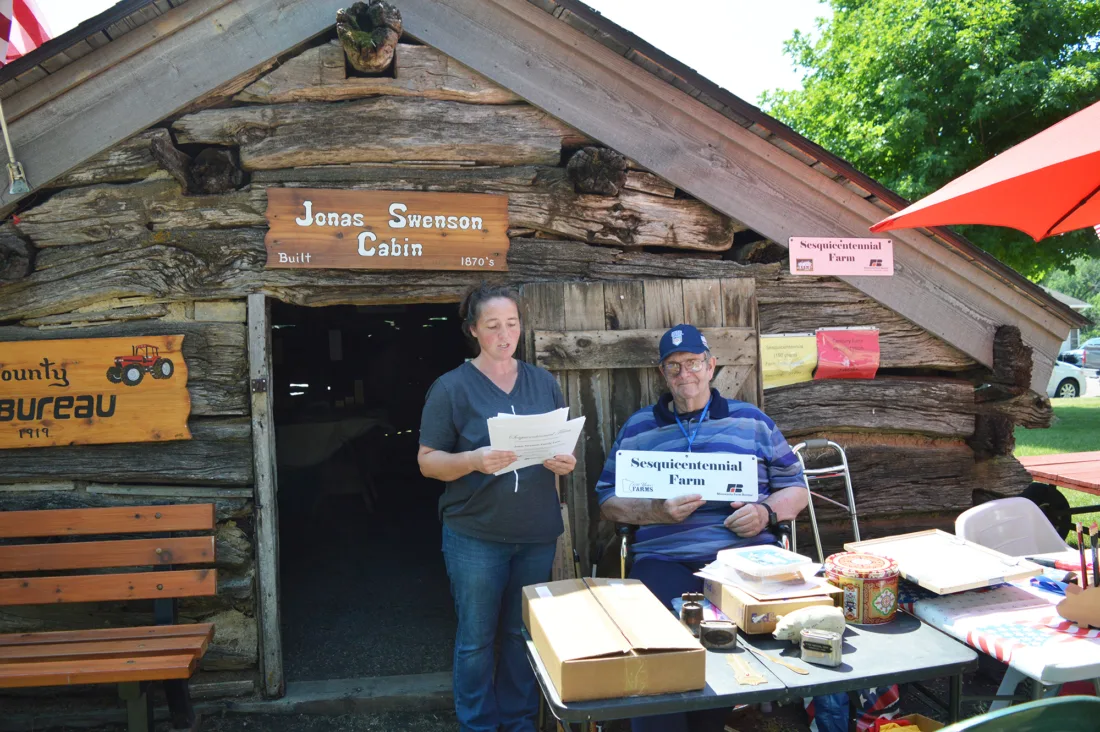
Photo by Deb Gau At this year's Lincoln County Fair, Bernard Aronson was presented with a Sesquicentennial Farm award. Aronson is the current owner of the Jonas Swenson family farm, which was homesteaded by his ancestor Jonas Swenson in the 1870s. Today, the original Swenson log cabin stands at the Lincoln County Fairgrounds.
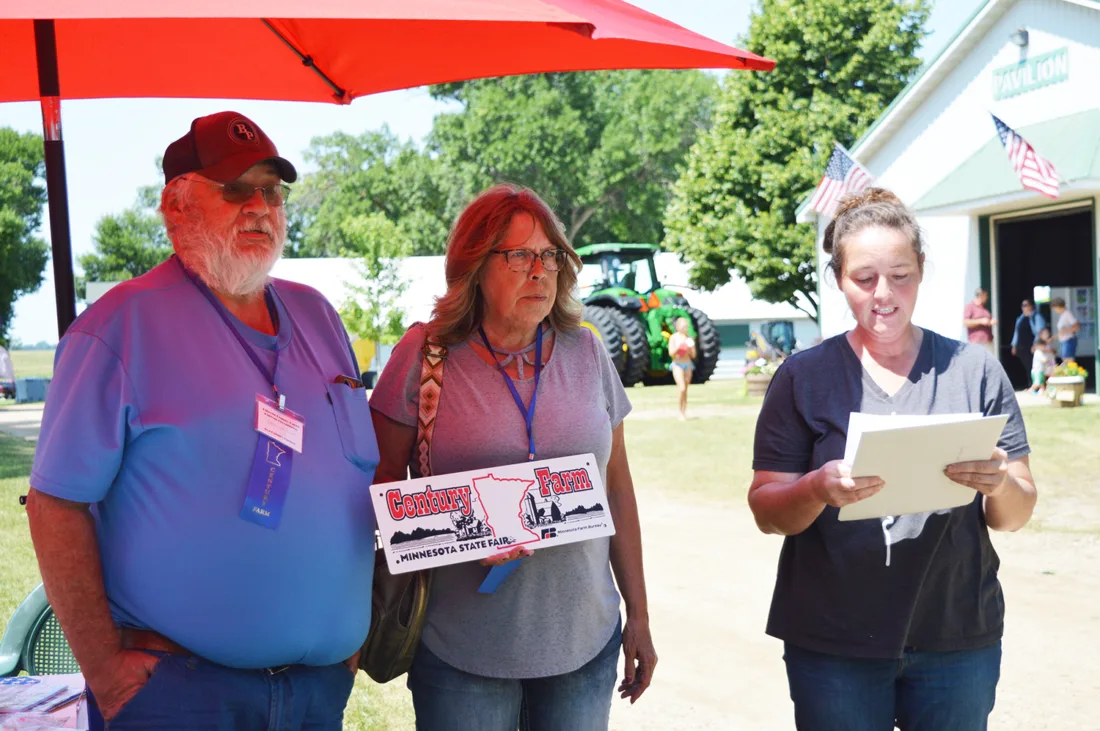
Photo by Deb Gau John and Dawn Wichern's family farm was recognized as a Century Farm at the Lincoln County Fair. The Wichern farm, known as "Henry's Hill," was purchased by Henry Wichern in 1926.
Photo by Deb Gau At this year's Lincoln County Fair, Bernard Aronson was presented with a Sesquicentennial Farm award. Aronson is the current owner of the Jonas Swenson family farm, which was homesteaded by his ancestor Jonas Swenson in the 1870s. Today, the original Swenson log cabin stands at the Lincoln County Fairgrounds.
Photo by Deb Gau John and Dawn Wichern's family farm was recognized as a Century Farm at the Lincoln County Fair. The Wichern farm, known as "Henry's Hill," was purchased by Henry Wichern in 1926.
Trending
TYLER -- There are generations of history connected with family farms in southwest Minnesota. Last weekend, the Minnesota Farm Bureau honored two farms that reached some major milestones.
During the Lincoln County Fair, the John M. and Dawn Wichern farm was recognized as a 2026 Century Farm. The Jonas Swenson family farm, which is today owned by Bernard Aronson, was recognized as a Sesquicentennial Farm. The two farms have had, respectively, 100 years and 150 years of family ownership.
Abby Popowski presented the Wicherns with a Century Farm award. The Wichern family farm was purchased by Henry Wichern in 1926. The land is located on Section 1 of Lake Benton Township between Lake Benton and Tyler. John and Dawn Wichern are the current owners, and the third generation of the family to own “Henry’s Hill.”
"Henry's Hill" got its name from Henry Wichern, who purchased the land in 1926. Before starting his own farm, Wichern was a railroad worker, Popowski said at the award ceremony. The farm's major crops over the years were corn, soybeans and small grains.
Today, the Wichern farm consists of 113 acres. The original farmhouse no longer stands, but John and Dawn Wichern built a new home there in 2009.
Popowski also presented Bernard Aronson with a sesquicentennial farm recognition. Aronson's ancestor Jonas Swenson was a Swedish farmer and cabinet maker who homesteaded in Royal Township, Lincoln County, in 1873. Aronson said Jonas Swenson was the first settler in the township, and he and his sons were involved in township government in the 1880s.
While the Swenson family's original farmland no longer has buildings on it, their log cabin was moved to the Lincoln County Fairgrounds in 1942. It still stands at the fairgrounds.
Aronson said some of the buildings at the farm the Swenson family left behind in Sweden have also been preserved, as part of a folk history museum.
In addition to the sesquicentennial award, Popowski read a letter from Minnesota state Rep. Joe Schomacker, recognizing the farm for 150 years of family ownership.
"Such a legacy is not only rare, but deeply meaningful. It reflects generations of hard work, resilience and dedication to agriculture, as well as a profound commitment to preserving both land and tradition for those who follow," Schomacker's letter said.