
Lunar eclipse darkens moon over Minn.
Local resident captures photos of Thursday eclipse
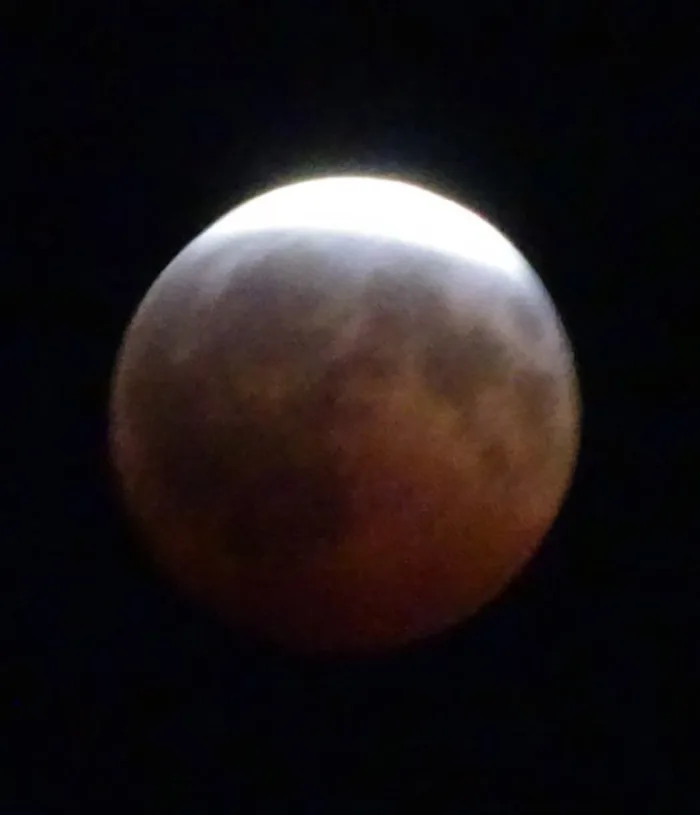
Photo courtesy of Kathy Jones Around 11:12 p.m. Thursday, a lunar eclipse visible over Minnesota was at its fullest extent. NASA said more than 96% of the moon's disk was in shadow during the eclipse.
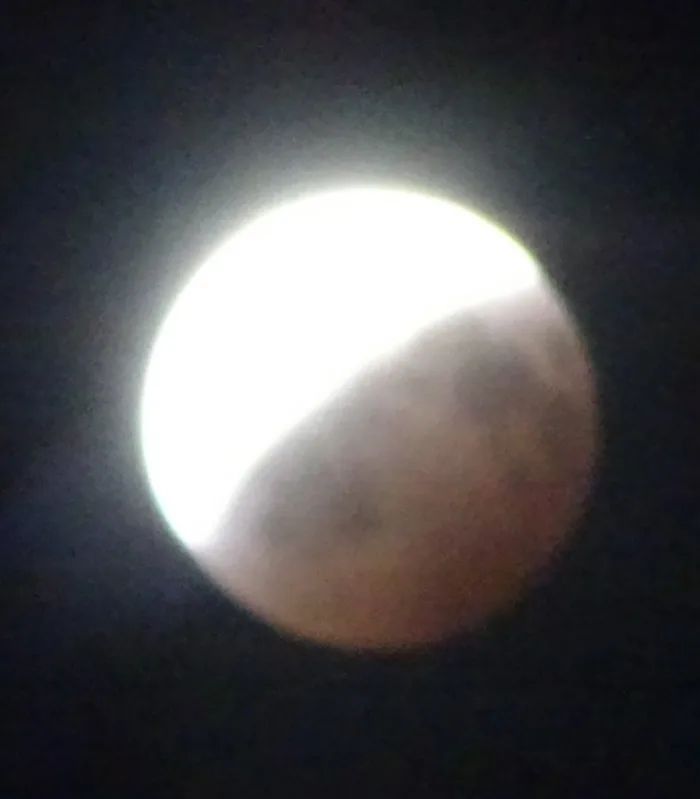
Photo courtesy of Kathy Jones By midnight, the Earth's shadow was moving away from the full moon, as seen in photos taken by local resident Kathy Jones.
Photo courtesy of Kathy Jones Around 11:12 p.m. Thursday, a lunar eclipse visible over Minnesota was at its fullest extent. NASA said more than 96% of the moon's disk was in shadow during the eclipse.
Photo courtesy of Kathy Jones By midnight, the Earth's shadow was moving away from the full moon, as seen in photos taken by local resident Kathy Jones.
Trending
MARSHALL -- On Thursday night the full moon went dim as an almost total lunar eclipse was reported over much of North America. At the fullest extent of the eclipse, a little more than 96% of the moon's disk was in shadow, NASA said.
Local resident Kathy Jones was outside with a digital camera Thursday night, and watched the progress of the eclipse. Unlike solar eclipses, lunar eclipses can be viewed with the naked eye.
"I didn't do any planning ahead as far as taking pictures, but I always try to take pictures of everything," Jones said.
It was interesting to watch the moon's light slowly disappear, and to see the details of the moon's surface, she said.
Jones said it took a minute or two to figure out how far to zoom in her camera and get the moon into focus. As the eclipse went on, she got a few shots using a tripod.
According to NASA, the partial eclipse visible Aug. 27 and 28 was caused by the moon passing into the Earth's shadow. As the eclipse progressed, the shadow caused more and more of the moon's face to appear darker, and coppery in color. In Minnesota, the fullest part of the eclipse was reported around 11:12 p.m.
By midnight, the shadow of the eclipse was starting to retreat, and the moon was getting brighter, Jones' photos showed.
The eclipse was visible in the Americas except for Alaska and northwestern Canada, in western Europe, and in western Africa, NASA said.
Thursday's eclipse was part of a series of lunar eclipses that happen roughly 18 years apart from each other, according to NASA. The previous eclipse in the series happened on Aug. 18, 2008. The next one will take place on Sept. 7, 2044.