
Lyon Co. tests PFAS response at landfill
Open house spotlights evaporation equipment for landfill runoff
Trending
LYON COUNTY -- The Lyon County landfill was getting more visitors than usual, as guests including county commissioners came to see a demonstration of equipment to help keep "forever chemicals" out of Marshall city wastewater.
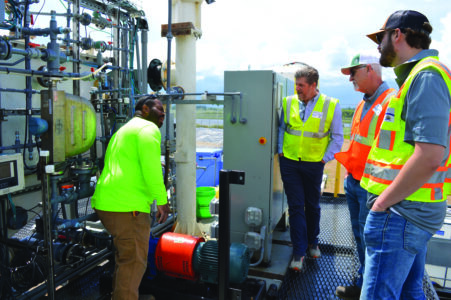
Heartland, a company that builds wastewater evaporation systems around the U.S., held an open house event Wednesday for the demonstration. The landfill is partway through a three-week study to see how evaporation might cut down on the amount of PFAS in landfill runoff that gets taken to the Marshall wastewater plant for treatment.
"We're looking at, how is it going to work for our facility?" said Lyon County Environmental Administrator Roger Schroeder.
Earlier this spring, Lyon County commissioners voted to approve a roughly $58,000 proposal for evaporating landfill runoff. The project is supported with the help of funding from a Minnesota Pollution Control Agency PFAS treatment grant.
PFAS, short for per- and polyfluoroalkyl substances, are a group of manmade chemicals that can end up in groundwater and drinking water. Increasingly, there are concerns being raised about regulating the amount of PFAS that can be allowed in drinking water and wastewater, said Catharine Reid, chief marketing officer of Heartland.
"One alternative is to evaporate leachate on-site," Reid said Wednesday. "We are seeing it catch on, especially in states that are beginning to be concerned about PFAS."
Reid said Heartland currently has 25 evaporation units operating in 10 different states, although none in Minnesota so far.
Heartland's demonstration equipment in Lyon County is receiving about 1,000 gallons of leachate a day from the Lyon County landfill, and evaporating about 95% of it, Reid siad.
Leachate - a liquid formed from a mix of decomposing garbage and precipitation like rainwater - is currently trucked from the landfill to the Marshall city wastewater treatment plant. The Lyon County landfill can haul 21,000 gallons of leachate, or runoff, to the Marshall wastewater plant a day, up to six days a week, said Marshall wastewater superintendent Scott Przybilla. The total amount of leachate the plant receives depends a lot on how much rainfall the area gets.
At Wednesday's open house, Heartland representatives explained how the evaporator equipment worked. A heat source helps evaporate water from a mist of leachate. Droplets and particulates from the leachate get filtered out, while water vapor is released from the evaporator. The demonstration equipment arrived on a flatbed trailer, but Reid said permanent evaporator systems could be bigger, with a capacity of up to 100,000 gallons a day.
Reid said PFAS that is left after water evaporates from leachate could be put back into the landfill. She said landfills are designed to keep contaminants contained, so there was less risk of PFAS getting out into the environment.
After the conclusion of the three-week study, Schroeder said Lyon County will need to consider not just how effective evaporating leachate is, but also the scale and potential costs of building an evaporation unit.