
New MMU plant making progress
Electric generator facility is ahead of schedule, MMU says
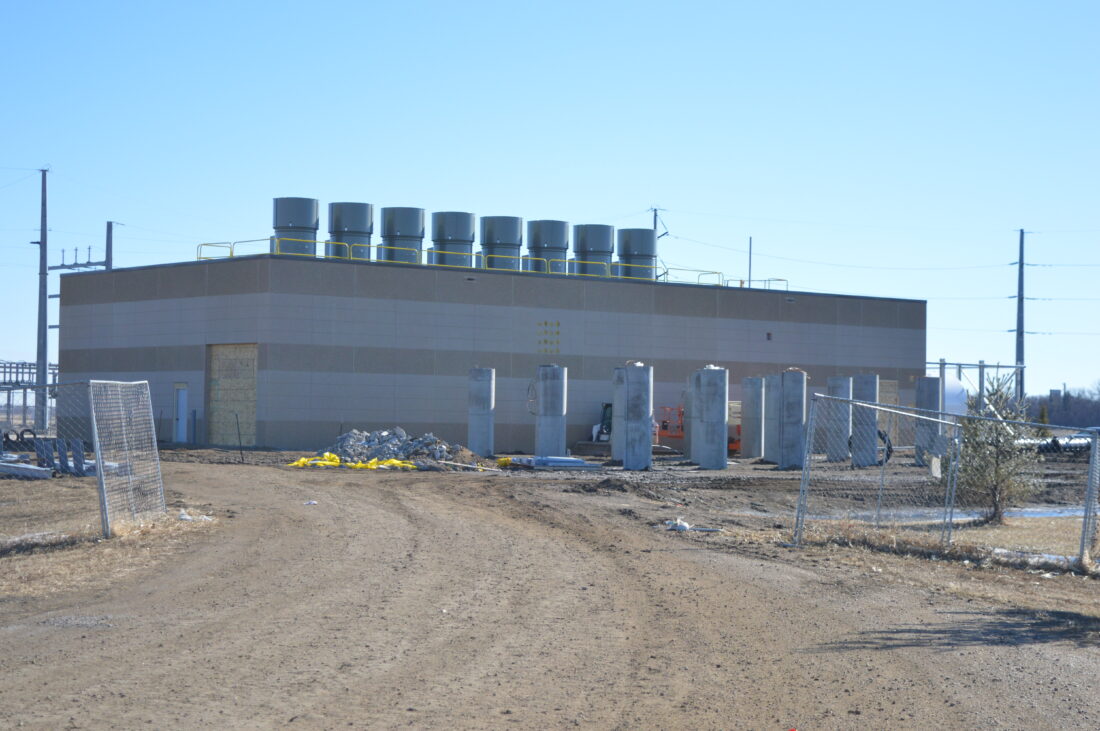
Photo by Deb Gau A new generator plant for Marshall Municipal Utilities continues to take shape on a site near the MMU water plant. The facility will house four new generators that can provide electricity to the city in case of an emergency. The new generators will replace MMU’s current emergency generator, which has been in service since 1968.
MARSHALL — A construction project to replace a nearly 60-year-old generator in the city of Marshall has been making a lot of progress, Marshall Municipal Utilities staff said this week. MMU Electric Operations Manager Tony Mead said work on a new generator plant is ahead of schedule.
“The generators now are anticipated to be delivered in the summer of 2026,” Mead said. Previously, MMU had thought the generators wouldn’t arrive until 2027.
In 2024, ground was broken near MMU’s water plant for a facility with four new generators for the city of Marshall. Mead and MMU General Manager Pete Wyffels said the generators will be able to help provide electricity to the city in case of an emergency. They will also be able to provide reserve capacity to other parts of the electrical grid.
“It’s a great way to ensure our reliability with our customers,” Mead said.
A total of four 2.8-megawatt generators will be installed in the new plant, for a total output of just over 11 megawatts of electricity, Mead said.
The roughly $18 million project will not have an impact on MMU’s rate-payers, Mead said. An incentive program from MMU’s electrical provider, Missouri River Energy Services, and the income MMU gets from making the new generators available to MRES, will help pay for the cost of construction.
“The new generating plant is going to be another resource for us,” Wyffels said. “And it’s a benefit to the community.”
The path toward building a new generator plant started with a feasibility study in 2023. Part of the study looked at adding new generators, using incentives from MRES, Mead said.
MMU currently has one turbine, located near the corner of South Fourth Street and Saratoga, that can serve as a backup electrical generator in case of an emergency, Mead said. The turbine also helps provide reserve capacity for other electrical systems. In a recent example, MMU activated the turbine during Winter Storm Fern to help with energy needs in the southern U.S., Wyffels said.
Although MMU’s current turbine is in good working order, it faces some challenges due to age. The turbine was installed in 1968, and it has become very hard to find the components needed to maintain it, Mead said.
The MMU Commission approved the purchase of new generator units in January 2024. Dirt work for the new generator plant, at a site next to MMU’s water plant, started in October 2024. Construction of the facility got underway last spring.
Mead said external work on the generator plant is getting closer to completion. Some of the next steps in the project will include installing exhaust stacks on the east side of the facility, and external radiators on the west side. At the same time, contractors have been working on the interior of the plant building, installing electric, plumbing and HVAC systems.
Mead said installing the four new generators will be a big task. The generators will be delivered to Shakopee and then transported to Marshall one at a time. Moving each generator into the new plant will require a dolly system, Mead said. “It will be a pretty amazing process,” he said.
Mead said it has been positive working with the project’s general contractor, Sentry. “They utilized many local contractors,” he said. “We’re proud of that.”
It’s anticipated that the project will be completed this fall – about four months ahead of schedule, Mead said. Hopefully, the new plant will have as long a lifespan as the old generator, he said.
“This project ensures the community of Marshall continues to have a source of local generation, and MMU can provide reliability during the most challenging times, which may be an extreme weather event or high energy demand on the electrical grid,” Mead said.
Local News
New MMU plant making progress

Independent receives seven Better Newspaper Contest awards
Swedzinski proposes fishing line changes
MARSHALL — A Minnesota state legislator is proposing licensing stamps that would allow anglers to fish for ...
Ice conditions cancel Hendricks fishing derby
HENDRICKS — Changing weather and unsafe ice conditions led the Lake Hendricks Improvement Association to cancel ...
A field trip with a hook
Vietnam veterans share experiences
MARSHALL — The Vietnam War ended more than 50 years ago, but its veterans still keep it alive by sharing their ...