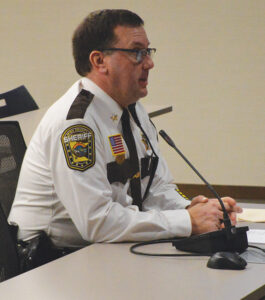
Lyon Co. Board talks benefit fraud prevention
Commissioners learn about investigation process during SWHHS annual report
MARSHALL — Preventing fraud is currently a hot topic in Minnesota, and this week Lyon County Commissioners had questions about fraud investigation for Southwest Health and Human Services leaders.
SWHHS Director Stacey Timm and Deputy Director Nancy Walker said that while SWHHS has a fraud prevention investigator, he looks at individual applications for public assistance.
“I would say we focus on individual fraud cases,” Timm said. “What we’re seeing at the state is fraud in fake facilities. And so if we think we see that, or are aware of that, we report that to the Office of the Inspector General.”
Staff from Southwest Health and Human Services gave an annual report on the agency’s finances and activities during Tuesday’s Lyon County Board meeting. SWHHS currently serves an area including Lyon, Lincoln, Murray, Pipestone, Redwood and Rock Counties.
During part of the presentation, Walker went over topics like public assistance that SWHHS works with in its service area. Walker said those forms of public assistance included programs like cash assistance, health care assistance, child care assistance and the Supplemental Nutrition Assistance Program (SNAP).
“We have a little bit over 13,400 cases in all six of our counties,” Walker said. Walker said SWHHS believes about 20% of applications for assistance do not get approved. “Yet that is still work that workers still have to do.”
Walker said SWHHS has a fraud prevention grant that it has received since the mid-1990s.
“We now have one investigator that covers nine counties, that would be the six counties of (SWHHS) as well as Cottonwood, Jackson and Yellow Medicine,” she said. “The role of this fraud investigator is to prevent public assistance benefits ever going out if indeed they’re not eligible, or stop them as soon as possible.” She said fraud investigations were meeting parameters, and being completed in 15 days or less.
“Are we missing some (fraud) by only having one for nine counties?” asked Commissioner Rick Anderson.
“We did have two for a while,” Walker said. “We are watching it, because our next grant opportunity will come up again in July of 2027, and if we continue to see increases in cases, I think we would have an opportunity to ask to have two investigators.”
Commissioner Todd Draper asked Walker how the investigator learns about potential fraud cases.
“So how our fraud prevention investigator receives referrals, they come from our eligibility workers,” Walker said. “It’s a very prescriptive program, in how it comes in. (The investigator’s) role is very direct. He is investigating new applications for public assistance, or current open cases for public assistance.”
If the investigator finds an applicant or person fraudulently receiving public assistance, his job is to either prevent the benefits from going out, or stop them.
“And those referrals have to come from either an eligibility worker or from the state helpline,” Walker said. “They moved fraud (investigations) out of the (Minnesota) Department of Human Services a few years ago, and actually it reports under the Office of the Inspector General.”
While the fraud prevention investigator is receiving referrals, “He’s not getting too many referrals at this point,” Walker said. “We’re not seeing exactly, you know, what we’re seeing in the news.”
Walker and Timm also went over some of the challenges facing SWHHS assistance programs. Walker said the Association of Minnesota Counties and the Minnesota Association of County Social Service
Local News
Lyon Co. Board talks benefit fraud prevention
MARSHALL — Preventing fraud is currently a hot topic in Minnesota, and this week Lyon County Commissioners had ...
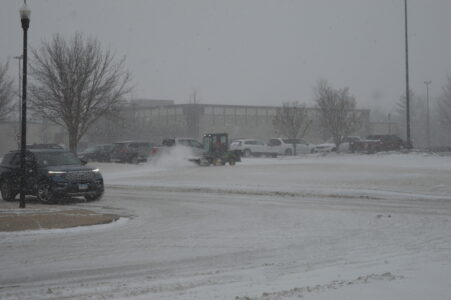
Winter weather blasts southwest Minnesota
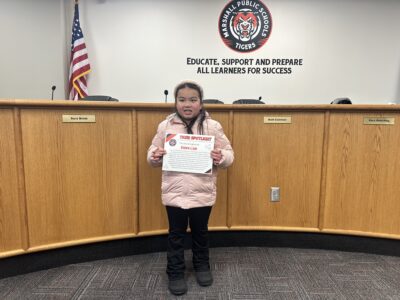
Marshall senior’s scholarship to MIT highlights Tiger Spotlight
No Thursday print edition because of the blizzard
The National Weather Service issued a blizzard warning for Wednesday. Blowing snow and extreme cold temperatures ...
MPS approves final list of district cuts after failed referendum
MARSHALL — The Marshall Public School board approved a final list of district cuts to take place next school year ...