
Making their case for capital projects
Legislators hear area bonding requests from SMSU, city of Cottonwood
Trending
MARSHALL -- Whether it's city streets, reliable water mains, or rail transport, southwest Minnesota communities can't thrive without good infrastructure, area residents told state legislators this week.
"Our infrastructure is vital to the growth of the community," Cottonwood City Administrator Teather Bliss said Tuesday night. Bliss was presenting an $8 million capital bonding request to the Minnesota Senate Capital Investment Committee. The funds would help Cottonwood make needed updates to its water and sewer systems, Bliss said.
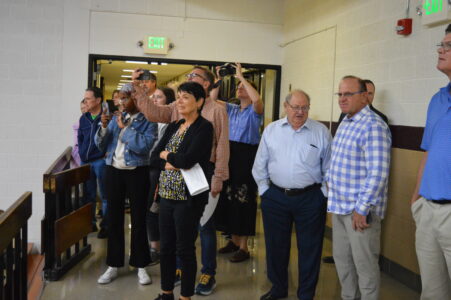
Members of the Senate Capital Investment Committee stopped in Marshall on Tuesday night as part of a statewide tour. Senators saw parts of the Southwest Minnesota State University campus that the university is seeking state bonding dollars for. In addition to SMSU's request, they also heard presentations from both the city of Cottonwood and the Minnesota Valley Regional Rail Authority.
Next week, the House Capital Investment Committee will also stop in Marshall, said Bill Mulso, vice president for government relations at SMSU.
A 'game-changer for us'
SMSU is seeking about $14 million in state bonding money for the first phase of a major renovation project on campus, university representatives said Tuesday. The university plans to build a Wellness and Human Performance Center that would renovate space in parts of the Physical Education and Bellows Academic buildings into new classrooms and labs. SMSU facilities director Tony Nubile said the project would also build a new public entrance to the university on the western edge of campus.
"This project is a game-changer for us," said SMSU President Kumara Jayasuriya. "The last bonding project we had was in 2008."
The Minnesota State system of colleges and universities has ranked SMSU's request seventh out of a total of 16 priority capital projects across Minnesota.
Nubile said SMSU was also seeking Higher Education Asset Preservation and Replacement (HEAPR) funding to update the university's locker rooms. "Our locker rooms are in very poor shape," Nubile said. The three-phase project would cost $12 million, SMSU staff said.
Making growth possible in Cottonwood
The city of Cottonwood was seeking state bonding money to help support needed infrastructure improvements, and make housing growth possible in the community, Bliss said Tuesday. Cottonwood was asking for $8 million for the first phase of a project to replace sewer and water lines in areas of the city.
Bliss and Kent Louwagie, an engineer with Bolton & Menk, said Cottonwood has problems with groundwater and stormwater flowing into its sanitary sewer system.
"The existing sewer system is mostly clay pipe," Louwagie said. Because of inflow and infiltration into the clay sewer pipes, Cottonwood ends up with too much water in its wastewater ponds.
The old cast iron water mains in Cottonwood also break frequently, and have lead to boil-water orders for the community, Bliss said. Since she started working for the city in 2019, there had been five water main breaks on Cottonwood's Main Street - and some of them happened during the summer.
Bliss and Louwagie said Cottonwood planned to split up the infrastructure project into three phases. Their $8 million bonding request would cover phase 1 of the project, and focus on areas of town in most need of water and sewer main replacement.
In total, all three phases of the project would cost an estimated $23 million, Bliss said.
Receiving state bonding money for the project would help ease the costs for Cottonwood residents, Bliss said.
"It is more trying to keep up with operations and maintenance while still keeping Cottonwood affordable," Bliss told Senate committee members.
Keeping freight moving
Another request brought to the Capital Investment Committee focused on the need for rail service to move agricultural products in southwest Minnesota. Representatives of the Minnesota Valley Regional Rail Authority (MVRRA) requested $18.43 million in bonding to continue rehabilitating a railroad line running from Norwood Young America to Hanley Falls.
The rail line helps ship goods like grain, ethanol and fertilizer, but it is limited by the poor condition of the track, MVRRA representatives said. Since 2002, MVRRA has invested more than $50 million in state and federal funding to rehab the rail line between Norwood and Fairfax. There are still 48 miles of the track left to complete.
MVRRA's bonding request could be used in different ways, presenters said. The funds could be used for rehabilitating the train tracks between Fairfax and Franklin, rehabbing the Morton rail yard, and continued rehabilitation of railroad bridges. Or it could be used as the local match for additional federal funds, which would potentially allow MVRRA to rehabilitate the train tracks all the way to Hanley Falls.
Mike Trosen, general manager of Meadowland Farmers Coop in Lamberton, said upgrading the railroad line would allow for more cost-effective shipment of grain, and access to new marketing opportunities.