
Mulching
The need to water and weed less are always a priority for gardeners. We love our gardens but we also need to be able to enjoy them. When my kids were little, it was always guaranteed that they would be in the garden alongside me, mostly playing with Tonka toys or their tractors. Now that they are grown up, I have found that if I need a little peace and quiet, I tell them that I am going up to the vegetable garden to weed. This generally gives me at least an hour of quiet time. However, I do not like to spend my whole day weeding and dragging hoses around either. So, there is one thing that you can do to take care of both problems at once. Mulching. I generally use anything that I can get my hands on such as straw, old hay that our livestock has wasted around the edges of bunks, leaves or anything else that is similar. I try to stay away from grass mulch because if you treat your lawn for weeds, the chemicals will possibly get into your garden or if you wait until the last moment to mow your lawn, you are inviting weed and grass seed into your garden as well. This year, because my trees have provided so much leave cover, I have actually started a pretty decent pile this year alongside mixing in rabbit manure that comes from my daughter’s 4-H rabbits. A win, win situation!
Mulching must be done carefully and usually what I do is I mulch my gardens to cover them in the fall to protect against Old Man Winter. I pull the mulch off around mid to late April and set it aside. After my plants in my perennial gardens are up and going for the year, I start to place it back around the base of the plants. 6 inches of mulch will get you started in less weeding and watering throughout the year.
In the vegetable garden, this is a little different work. Here I make sure to pull off any vegetation from the garden in the fall so I am not leaving any plant material behind that might have diseases on it. After I have my vegetable garden planted and my plants are up, I will start to mulch around the rows. Here again, it is important to use at least 6 inches of mulch for the best practices for watering and keeping weeds down. The tricky part of mulching in a vegetable garden, is that weeds are pretty smart and they like to grow up in the rows alongside your vegetables. So, while you still have to weed, it is not as bad as if you didn’t cover the soil at all. This will also eliminate having to water your vegetable garden too. In the fall, pull out the old vegetable plants but you can till in the mulch that you have had on the garden all summer long. This will help to add to the fertility of the garden soil. You can also check outhttp://blog-yard-garden-news.extension.umn.edu/2018/05/3-tips-to-reduce-need-to-weed.html for Annie Klodd, Extension Educator-Fruit and Vegetable Production, 3 Tips to Reduce the Need to Weed.
For more information on gardening, you can reach me at s.dejaeghere@me.com or reach the Lyon County Master Gardeners at 507-532-8219.
Ag and Extension
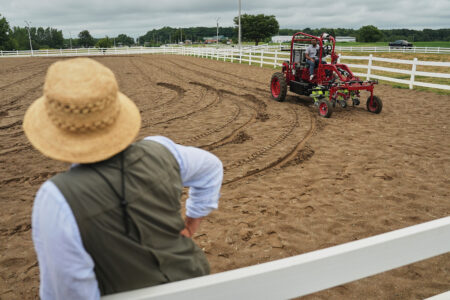
Will electric tractors gain traction?
Expedited Congressionally mandated disaster assistance for farmers announced
U.S. Secretary of Agriculture Brooke L. Rollins announced that agricultural producers who suffered eligible crop ...
SMSU Agronomy Field Day
The seventh annual SMSU Agronomy Field Day is scheduled for Friday, July 18, from 11 a.m.-1:30 p.m. at the SMSU ...
Farmers educate students on power of soybeans
The Yellow Medicine County Corn and Soybean Growers Board understands the vital role agriculture plays in rural ...
Strategic Farming: Let’s talk crops! webinar focused on corn insect pest challenges
On Feb. 26, Dr. Fei Yang, UMN Corn Extension entomologist, joined UMN Extension Crops Educator Dr. Anthony Hanson ...
USDA announces Aug. 14 application deadline for Emergency Relief Program Assistance for commodity and specialty crop producers
The U.S. Department of Agriculture (USDA) announced the deadline for commodity and specialty crop producers to ...