
Guard your trees
Planting time is a good time to install a tree guard to protect your tree from winter injury and bark chewing by small mammals.
One type of tree guard is a plastic spiral. These exclude voles (“meadow mice”) and rabbits, preventing them from feeding on the bark. The white plastic also reflects sunlight from the trunk, which helps prevent the trunk from heating up on a cold, sunny winter day. If the bark temperature gets above freezing, water in the conductive tissue under the bark becomes liquid and begins to flow through the cells. When the sun goes down or behind a cloud, the liquid water suddenly freezes, damaging the cells and sometimes killing all the conductive tissue on one side of the trunk.
Plastic tree guards are not a perfect solution, however. Because some types fit tightly to the trunk, they can cause the bark to stay moist, leading to disease.
They also can constrict the trunk as it grows. If you use plastic tree guards, make sure they are pushed down into the soil to a depth of 2 inches. This will keep voles from burrowing under them to get at the trees. Loosen the guard periodically, if necessary, to allow the tree to expand.
The best way of using a plastic tree guard is to remove it for the growing season and put it back on in fall.
Another option is to put a hardware cloth cage around the base of the tree. Like a plastic tree guard, it should be pushed into the soil to prevent entry of voles. It should extend up the trunk to just below the first branch, and should not fit tightly around the tree. Leave a few inches of room for the tree to expand.
The hardware cloth cage will not protect the tree against winter injury, so if you plan to use this method, first paint the trunk of the tree with white latex paint. The paint will reflect the heat of the sun just as the white plastic tree guards do.
Once the tree has rough and flaky mature bark, neither winter sun nor chewing animals can harm it, so tree guards will not be necessary. For the first years of its life, however, it’s important to protect the trunk of your fruit tree.
Tree guards should prevent vole damage and reduce rabbit damage. When the snow is deep, however, rabbits can eat branch tips and strip bark on scaffold branches. Leaving pruned branches on the ground may be an effective method to reduce this kind of damage. The rabbits will chew the bark from the branches and leave the living trees alone as long as the branches remain above the snow. Rodenticides should be avoided, especially in urban areas where pets may find the poison. Limiting damage caused by deer may be more difficult.
Deer typically eat branch tips throughout the year, but particularly in winter. One method of control is to hang a very strongly scented bar of soap in each tree in summer. The deer do not like the smell of the soap and are discouraged from eating the tree. Since the deer may become desensitized to the soap over time, you may need to periodically change the brand of soap.
Other repellents, such as spray-on bittering agents, may discourage browsing by deer. Keeping a dog in the yard will also provide some protection. Some home fruit growers construct chicken-wire cages around their fruit trees to keep deer from eating their trees in winter. These structures may be unsightly but effective.
Master Gardeners of Lyon County will be holding the annual plant sale from 9 a.m.-noon on Saturday, June 13, by Memorial Park at the corner of 1st Street and Marvin Schwan Drive, across from the Casey’s gas station.
For more information regarding gardening, you can email me at s.dejaeghere@me.com
Ag and Extension
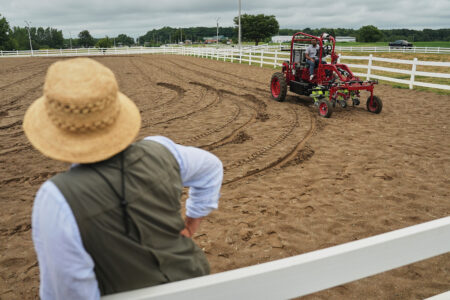
Will electric tractors gain traction?
Expedited Congressionally mandated disaster assistance for farmers announced
U.S. Secretary of Agriculture Brooke L. Rollins announced that agricultural producers who suffered eligible crop ...
SMSU Agronomy Field Day
The seventh annual SMSU Agronomy Field Day is scheduled for Friday, July 18, from 11 a.m.-1:30 p.m. at the SMSU ...
Farmers educate students on power of soybeans
The Yellow Medicine County Corn and Soybean Growers Board understands the vital role agriculture plays in rural ...
Strategic Farming: Let’s talk crops! webinar focused on corn insect pest challenges
On Feb. 26, Dr. Fei Yang, UMN Corn Extension entomologist, joined UMN Extension Crops Educator Dr. Anthony Hanson ...
USDA announces Aug. 14 application deadline for Emergency Relief Program Assistance for commodity and specialty crop producers
The U.S. Department of Agriculture (USDA) announced the deadline for commodity and specialty crop producers to ...